Albania Entry Rules 2026: Visa Fees, Documents & Changes
Albania Visa Requirements 2026 Entry Rules: The Ultimate Guide
Albania is currently experiencing an unprecedented tourism boom. With its pristine "Maldives-vibes" beaches in Ksamil, Ottoman-era architecture in Berat and Gjirokastër, and the bustling, colorful energy of Tirana, the "Land of Eagles" has rapidly evolved from a hidden Balkan secret into one of Europe's top destinations. However, traveling to this Mediterranean gem in 2026 requires more than just booking a flight and packing your bags. Understanding the exact albania visa requirements 2026 entry rules is essential to ensure you are not turned away at the boarding gate or the border crossing.
Because Albania is not a member of the European Union (EU) nor the Schengen Zone, it maintains its own sovereign visa policy and border control regulations. Navigating these rules can be complex, especially with major regional border changes taking effect in Europe this year. Whether you are a weekend tourist, a digital nomad planning a long-term stay, or a traveler trying to navigate your Schengen rolling day limit, this guide provides the most comprehensive, up-to-date breakdown of Albania's entry protocols in 2026.
Understanding Albania's Border Policy: Why 2026 is Different
In 2026, Albania's border rules are heavily influenced by its geographical position, its aspirations to join the European Union, and its close bilateral ties with major global powers. The country operates a multi-tiered entry system that ranges from complete visa-free access to a highly efficient, fully digital e-Visa platform. While Albania remains highly accessible and welcoming, immigration officials have stepped up checks on documentation, return flights, and financial sufficiency to align with modern border standards.
Furthermore, major updates to European border infrastructure—specifically the full implementation of the European Union's biometric Entry/Exit System (EES)—have created secondary effects for travelers entering Albania by land or sea from neighboring Schengen countries. Staying informed is no longer optional; it is a critical step in planning your journey. For more guidance on staying safe and compliant while exploring international destinations, explore our travel safety blog.
Key Authority Sources and Legal Frameworks
Albania's immigration policies are legally governed by Law No. 79/2021 “On foreigners” and the subsequent Decision of the Council of Ministers No. 858, which outlines the entry, stay, and treatment of foreign citizens. The regulations are managed directly by the Albanian Ministry for Europe and Foreign Affairs and the General Directorate of Border and Migration of the Albanian State Police. The information compiled in this guide is sourced directly from these official government entities, ensuring you receive legally precise and reliable directives for your upcoming trip.
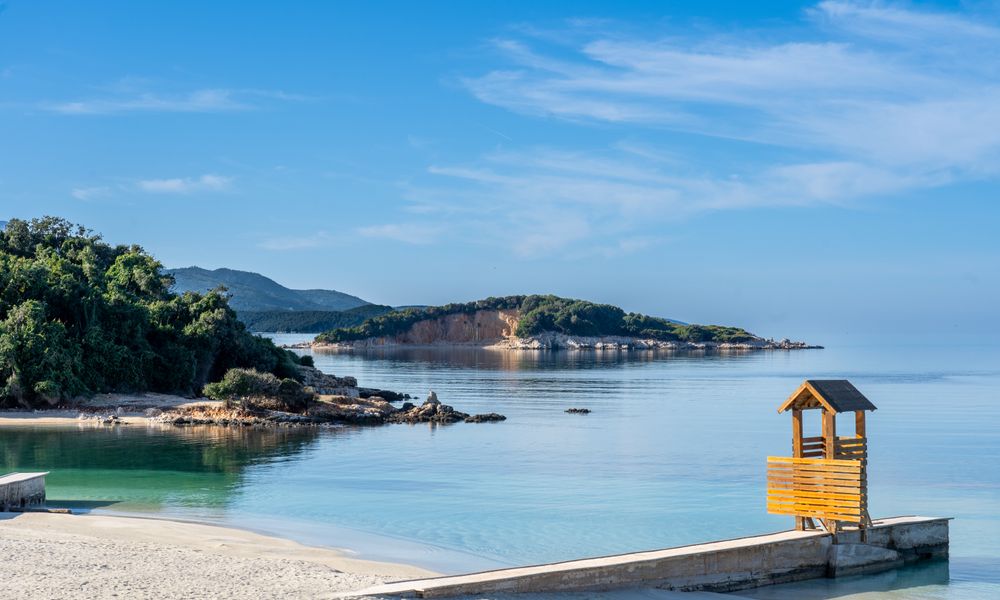
Decoding the Albania Visa Requirements 2026 Entry Rules for Global Passports
Your entry experience in Albania depends entirely on the passport you hold, your residency status, and whether you possess qualifying third-country visas. Under the current albania visa requirements 2026 entry rules, travelers are categorized into five distinct tiers. Find your category below to understand your exact requirements.
1. The Visa-Free Tier (Up to 90 Days)
Citizens of over 80 countries can enter Albania completely visa-free for tourist stays of up to 90 days within any rolling 180-day period. For these nationalities, no pre-registration or online visa application is necessary. You simply present your passport at border control, receive an entry stamp, and begin your trip.
The 90-day visa-free privilege applies to the following passport holders:
- European Union & EEA Countries: All 27 EU member states, plus Iceland, Liechtenstein, Norway, and Switzerland. (Note: EU and Schengen citizens can enter Albania using a valid national biometric ID card in lieu of a passport).
- United Kingdom: British citizens can enter visa-free for up to 90 days.
- North America: Canada and Mexico.
- Oceania: Australia and New Zealand.
- Asia: Japan, South Korea, Singapore, Israel, Turkey, Azerbaijan, Kazakhstan, and China.
- South America: Argentina, Brazil, Chile, Colombia, Peru, and Uruguay.
- Balkan Neighbors: Bosnia and Herzegovina, Montenegro, North Macedonia, Serbia, and Kosovo.
2. The Golden Ticket: Visa-Free Entry with a Schengen, US, or UK Visa
If your passport is not on the visa-free list, you may still bypass the Albanian e-Visa process entirely if you hold a qualifying, active visa from a major global jurisdiction. Albania offers a "Golden Ticket" visa exemption policy to facilitate easy travel for verified global travelers. Under this rule, you can enter Albania visa-free for up to 90 days if you hold any of the following:
- A valid, multiple-entry Schengen visa (or a Schengen residence permit).
- A valid, multiple-entry United States visa (or a US residence permit).
- A valid, multiple-entry United Kingdom visa (or a UK residence permit).
- A 10-year United Arab Emirates residence permit, provided it has been issued by competent UAE authorities and remains valid for at least one year at the time of entry into Albania.
CRITICAL TRAP TO AVOID: The Albanian border police strictly enforce two conditions for these third-country visas:
- The visa must be multiple-entry. If you hold a single-entry Schengen or US visa, it cannot be used to enter Albania.
- The visa must have been previously used (activated) at least once to enter the country of issuance. For example, if you have a brand-new, unstamped French Schengen visa, you cannot fly directly to Tirana first. You must first enter the Schengen Zone (e.g., land in Paris) before using that visa to enter Albania. If you violate this rule, your airline will deny you boarding, or you will be turned away at Tirana International Airport.
3. The One-Year American Privilege
Due to an exceptionally strong bilateral agreement between Washington and Tirana, citizens of the United States enjoy a unique, highly generous privilege. U.S. passport holders can enter the Republic of Albania and stay visa-free for up to one year without needing to apply for a formal residence permit. If a U.S. citizen wishes to remain in Albania beyond 365 days, they must apply for a local residence permit through the Regional Directorate of Border and Migration Police before their first year expires.
4. The Temporary Seasonal Exemptions: Saudi Arabia & Qatar
To boost high-season tourism from the Gulf region, the Albanian government frequently implements temporary, seasonal visa exemptions. For the current year, the Council of Ministers has decreed that citizens of Saudi Arabia and Qatar can enter Albania completely visa-free for tourism from April 15, 2026, until December 31, 2026. Outside this window, or for purposes other than tourism, standard visa application rules resume.
5. The Online e-Visa (Type C Short Stay Visa)
If your nationality is not visa-exempt, and you do not hold an activated, multiple-entry Schengen, US, or UK visa, you are required to obtain a visa prior to travel. Fortunately, Albania has phased out the stressful requirement of visiting physical embassies for most global citizens, transitioning to a fully digital Type C Short Stay e-Visa system.
Nationalities eligible to apply for the electronic visa online include passport holders from:
- India
- Egypt
- Philippines
- South Africa
- Thailand
- Vietnam
- Pakistan
- Morocco
- ...and over 80 other non-exempt nations.
Those who do not fall into any of these digital-friendly categories must apply for a traditional visa physically at the nearest Albanian diplomatic mission or consular post geographically closest to their country of origin. For comprehensive planning tips across different regions, see our travel guides.
The Step-by-Step Albania e-Visa Application Process
The digital pre-clearance framework for the Albanian short-stay e-Visa is highly efficient but demands absolute accuracy. The entire application is completed online, and travelers are strictly forbidden from applying while already physically inside the territory of the Republic of Albania.
e-Visa Fees and Processing Times in 2026
When preparing your budget and timeline, keep the following baseline figures in mind:
- Official Visa Fee: The government fee for a Type C Short Stay Tourist e-Visa is highly affordable, set at €15 (approximately $16 USD or ₹1,350 INR).
- Refund Policy: This fee is strictly non-refundable and non-reimbursable. If your application is rejected due to clerical errors or insufficient documentation, you will forfeit the payment and must apply again.
- Standard Processing Time: The standard evaluation process takes a minimum of 15 working days from the moment your payment is confirmed.
- Peak Season Processing Time: During the chaotic summer travel window (typically May through September), administrative bottlenecks can occur. Processing times during these months can stretch to 30 working days. Therefore, travelers are strongly advised to submit their e-Visa applications at least 3 to 4 weeks prior to their scheduled departure date.
Step-by-Step Digital Application Guide
To successfully obtain your electronic visa, navigate the following official process carefully:
- Create an Account: Visit the official Republic of Albania e-Visa Portal. Click on "Register" to create an account using your email address and a secure password.
- Start a New Application: Once logged in, click "New Application" and select the **Type C Short Stay Visa (Tourist)** category.
- Input Personal and Passport Data: Complete the online questionnaire with your exact passport details. If you possess dual citizenship, make sure the nationality you select on the application form matches the exact passport you will physically travel with. Any discrepancy will render the approved e-Visa completely invalid.
- Upload Supporting Documents: You must upload clear, legible scans of all required documents. Crucially, all documents must be in PDF format, and any document not originally in English or Albanian must be translated by an authorized translator before upload.
- Submit and Pay: Review your details for accuracy, then proceed to the secure online payment gateway. Pay the **€15** fee using a credit or debit card. If payment is not completed within 15 days of draft creation, the system automatically transitions your application to "Not Paid" and deletes it.
- Receive and Print Your e-Visa: Once approved, the official digital visa is generated and dispatched to your registered email address. You must **print a physical paper copy** of this e-Visa to present to the airline representatives at check-in and to the border control officers upon arrival in Albania.
Common Mistakes and Rejection Risks on the e-Visa Portal
Consular officers are incredibly meticulous. To prevent delays or flat-out rejections, keep these strict administrative boundaries in mind:
- Prohibited Communication: Under Albanian immigration law, applicants, sponsors, or hosts are strictly forbidden from contacting the consular offices or ministries directly via email or phone while an application is being verified. Consular staff will contact you via the portal if updates or additional documents are required. Engaging in unsolicited outreach can result in your application being flagged and delayed.
- Blurry Uploads: Scanned documents must be pristine. Blurry photos taken on smartphones are the number-one reason for administrative delays. Use a proper scanner to generate clear PDF files.
- Single Applicants for Group Visas: If traveling as a family, ensure individual applications are linked or processed accurately according to the portal's active workflow rules.

Essential Document Checklist for Border Control
Simply holding a visa or arriving from a visa-free nation does not grant you an automatic right of entry into Albania. The final decision rests entirely with the border control officer at your port of entry. When queueing at immigration, you must have a physical folder containing the following documents ready for inspection:
Passport Validity and Blank Page Rules
Your passport is your primary legal travel document. To meet the requirements of the Albanian State Police and international standards, your passport must comply with the following:
- Minimum Validity: Your passport must be valid for **at least three months beyond your planned date of departure** from Albania. For safety, travelers are encouraged to maintain at least six months of validity.
- Condition: The passport must be in good physical condition, with no torn pages, water damage, or compromised covers.
- Blank Pages: You must have at least **one completely blank page** available for physical entry and exit stamp placement.
Financial Sufficiency and Accommodation Proof
To prove you can support yourself during your stay without relying on public funds or engaging in illegal local employment, you must demonstrate the following:
- Proof of Funds: You must possess a minimum of **€50 (approximately $54 USD) per day of your planned stay** in Albania. If you are traveling with minors or dependents, this daily rate applies per person. To prove this, carry recent bank statements from the past three months showing your account balance, or a clear credit card statement showing available limits.
- Accommodation Proof: You must present a confirmed hotel booking, Airbnb invoice, or an official, notarized letter of invitation from a legal resident or citizen of Albania who is hosting you.
- Return or Onward Ticket: You must have a confirmed physical flight, bus, or ferry ticket proving you will depart Albania before your authorized stay (e.g., 90 days) expires. One-way tickets are a major red flag and frequently result in entry denial unless you hold a long-stay visa or residence permit.
For official, real-time safety advisories and entry verification, travelers are strongly encouraged to consult the U.S. Department of State's Albania International Travel Information or review the detailed border warnings provided by the United Kingdom's Foreign, Commonwealth & Development Office (FCDO) travel advisory.
Health and Vaccine Guidelines for Albania
Albania maintains a clean health record, and there are currently no general requirements for COVID-19 vaccinations or negative tests. However, standard global health requirements apply:
- Yellow Fever Vaccine: A valid yellow fever vaccination certificate is strictly required for any traveler aged one year or older who is arriving from, or has transited for more than 12 hours through, a country with high risk of yellow fever transmission.
- General Medical Advice: It is highly recommended to purchase comprehensive travel medical insurance that covers emergency medical evacuation and hospitalization in Tirana. To view the latest international health advisories, check the Centers for Disease Control and Prevention (CDC) health guidelines for Albania.

Recent Entry Rule Changes: May 2026 and the Schengen EES Ripple Effect
The most significant border change impacting travel in this region occurred on April 10, 2026, with the full operational rollout of the European Union's new Entry/Exit System (EES). While Albania is not part of the Schengen Zone, this new system directly impacts travelers crossing back and forth between Albania and neighboring EU countries.
What is the EES and How Does it Affect Albania?
The EES is a fully automated biometric registry that replaces physical, manual ink stamping of passports at all external Schengen borders. If you are crossing the land border from Albania into Greece, taking a ferry from Saranda to Corfu, or flying from Tirana to Italy or Germany, you are crossing an external Schengen border.
Under the fully operational 2026 system, non-EU travelers crossing these borders must now submit biometric data, including:
- Four fingerprints
- A high-resolution facial scan
- Digital passport registration
This biometric record is stored in a centralized database for three years, automatically calculating your exact days of stay inside the Schengen Zone to instantly detect overstays. Because of this rigorous new system, border controls at major land crossings (such as Kakavija between Albania and Greece) are experiencing significantly longer queues and wait times. Travelers should plan for extra travel hours when driving or taking buses across the border.
The "Schengen Pause" Strategy in 2026
Historically, non-EU travelers (such as Americans, Canadians, and Australians) have used Albania as a "Schengen Pause" destination. Because Albania operates outside the Schengen Zone, spending time on the Albanian Riviera does not count toward your strict 90-day limit inside the Schengen Zone.
In 2026, this strategy remains highly effective, but you must be exceptionally meticulous. The EES now tracks every single day you spend inside the Schengen Area with mathematical precision. If you miscalculate your Schengen days by even a few hours before crossing into Albania, the EES will instantly flag the overstay when you arrive at Schengen border control (e.g., Greece), resulting in automated, heavy fines and potential multi-year travel bans. Always verify your rolling Schengen day count before planning a border-crossing trip to or from Albania.
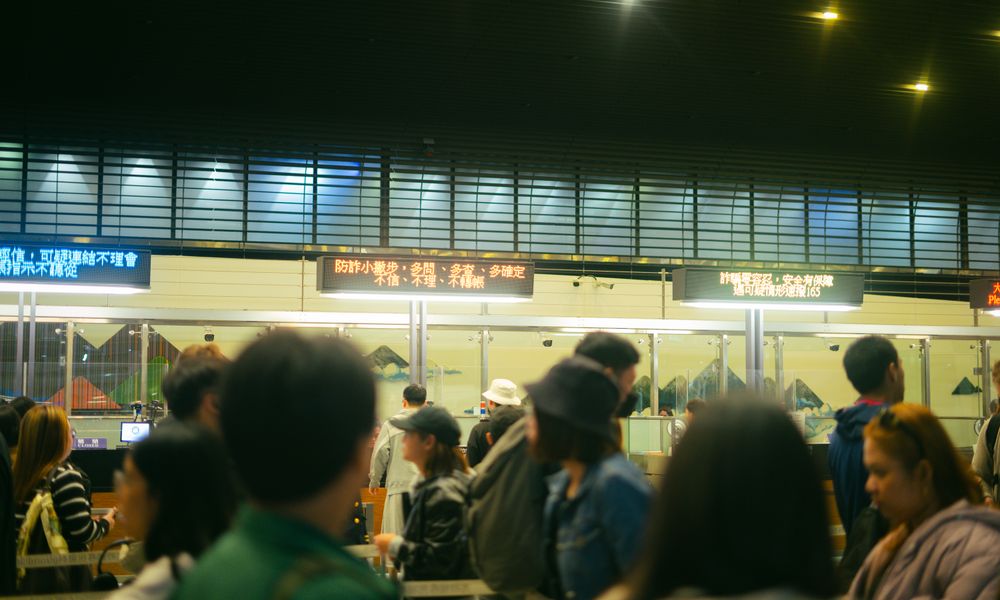
Overstay Penalties, Border Crossings, and Land Border Dynamics
Albania is exceptionally welcoming, but the Ministry of Interior is strict when enforcing its national laws. Travelers who do not respect their authorized stay limits will face swift legal consequences.
Overstay Penalties in Albania
If you stay in Albania beyond your authorized visa-free period (90 days for most nationalities, or 1 year for US citizens) without obtaining a valid residence permit, you are in violation of national immigration law.
- Financial Fines: Fines for overstaying are severe, typically starting at several hundred Euros and scaling depending on the length of the overstay. Fines must be paid at the border or the Regional Directorate of Border and Migration Police before departure.
- Re-entry Bans: For significant overstays, immigration authorities will issue a formal re-entry ban ranging from 1 to 5 years, preventing you from returning to Albania and potentially raising red flags for future travel throughout the broader Balkan and Schengen regions.
- Airport Detentions: Attempting to board a flight out of Tirana with an expired visa or overstayed status will result in immediate detention at border control until your case is legally adjudicated and the fine is settled.
Navigating Albania's Land Borders
If you plan to cross into Albania via land, you will interact with different border posts. The primary crossings include:
- Kakavija (Greece / Albania): Located in the south, this is the busiest and most strictly regulated crossing. Due to Greece being a Schengen member, EES biometric checks are fully active on the Greek side, resulting in extensive queue delays, particularly during peak summer.
- Hani i Hotit (Montenegro / Albania): Located in the north, ideal for travelers driving down from Kotor or Podgorica. Border checks are relatively efficient but require proper vehicle green-card insurance.
- Qafë Thanë (North Macedonia / Albania): Positioned near the scenic Lake Ohrid, this crossing is vital for travelers transiting between Skopje and Tirana.
- Morinë (Kosovo / Albania): A fast, highly integrated highway crossing with minimal delays, reflecting the close ties between the two nations.
Driving Requirements: If crossing by car, you must present a valid international driving permit, vehicle registration documents, and a valid Cross-Border Green Card Insurance policy that explicitly covers Albania. Standard European rental car insurance policies often exclude Albania, so you must purchase a local green card at the border kiosk if necessary.
Transit Visa Requirements
If you are simply transiting through Tirana International Airport (TIA) to a third destination, your requirements depend on whether you cross the border into the transit zone:
- Airport Transit Visa (Type A): Most travelers who remain inside the international transit lounge of Tirana International Airport to catch a connecting flight do not require an airport transit visa.
- Exceptions for High-Risk Nationalities: Certain designated nationalities are legally required to obtain a **Type A Transit Visa** even if they do not leave the transit area. You must verify if your specific country of origin falls under this restriction before booking a multi-leg flight via Tirana. If you must clear immigration to collect baggage and re-check in for a separate flight, you will be subject to standard Type C Entry requirements.
What to Do If Visa Rules Change After Booking Your Trip
In the highly volatile landscape of global immigration, visa and entry policies can shift overnight due to political alignments, diplomatic updates, or public health emergencies. Finding yourself at an airport with a non-refundable ticket only to realize you are no longer eligible for visa-free entry is a traveler's worst nightmare.
If you learn that Albania's entry policies have updated after you have booked your trip, take these urgent steps:
- Verify the Grace Period: Governments occasionally implement transition windows for new visa rules. Check official ministerial press releases to see if there is a delay in enforcement.
- Apply for an e-Visa Immediately: If you are suddenly required to obtain a visa, log on to the e-Visa Albania Portal and submit an expedited application. Be sure to upload your booked flight itinerary to demonstrate your travel timeline.
- Contact Your Airline: Airlines are legally bound to enforce destination visa rules. If your entry status has changed and you cannot obtain a visa in time, contact your airline immediately to see if you qualify for a flight change or voucher under their "unforeseen government regulation changes" waiver policies.
How TripGuard360 Protects Your Travels with Real-Time AI Alerts
Travel rules are constantly changing, and relying on outdated forums or blog posts is a recipe for a border crisis. That is where **TripGuard360** comes in. TripGuard360 provides a sophisticated, real-time safety and visa monitoring ecosystem designed to keep modern travelers entirely secure.
Utilizing advanced Gemini AI, TripGuard360 monitors official government websites, ministerial databases, consular feeds, and global travel advisories 24 hours a day, 7 days a week. The moment a country—including Albania—updates its visa requirements, adjusts its passport validity rules, or implements new biometric checks, TripGuard360's AI detects the change instantly.
As a subscriber, you receive instant Telegram and email alerts tailored to your specific passport and travel itinerary the exact second a policy changes. No more manual searching, no more parsing complex legal decrees, and no more stressful surprises at the airport boarding gate. With TripGuard360, you will always be a step ahead of border regulations, allowing you to focus on what truly matters: enjoying your Albanian adventure with total peace of mind.