Cambodia Visa Requirements 2026: 5 Entry Rules You Must Know
For centuries, the Kingdom of Cambodia has captivated the imaginations of travelers worldwide. From the jaw-dropping architectural marvel of Angkor Wat in Siem Reap to the bustling, rapid-growth urban landscape of Phnom Penh and the pristine, white-sand beaches of Koh Rong, Cambodia remains a top-tier travel destination in Southeast Asia. However, the administrative landscape of entering the country has transformed dramatically over the last few years. The days of casual, unstructured border runs and paper-heavy immigration queues are gone. As we navigate the year 2026, the Cambodian government has ushered in a highly digitized, strictly regulated, and closely monitored immigration framework designed to enhance national security, streamline border control, and boost modern tourism infrastructure.
Whether you are planning a short-term tropical getaway, a multi-month regional backpacking journey, or looking to relocate as a digital nomad, understanding the current entry rules is vital. Traveling without the correct preparation can result in severe financial penalties, denied boarding, or being turned away at a remote border checkpoint. This comprehensive article explores everything you need to know about navigating the border protocols, visa categories, and the mandatory digital declarations currently in force in Cambodia.
Navigating Cambodia Visa Requirements 2026 Entry Rules: An Essential Guide
To successfully plan an international trip to Cambodia, you must first master the fundamental structure of the country's immigration framework. The Cambodian Ministry of Interior and the General Department of Immigration have worked extensively to transition almost all aspects of border entry into a digital format. While this has reduced the prevalence of corruption at land checkpoints and streamlined arrival times at airport terminals, it has also introduced a set of rigid procedures that leave very little room for traveler error.
Understanding Cambodia's Tourist Visa Options
The vast majority of international visitors entering Cambodia do so under the Tourist Visa (Type-T). This visa category is specifically designed for individuals entering the Kingdom solely for leisure, sightseeing, or family visits. The Type-T visa is a single-entry visa that grants the holder a maximum stay of 30 days in the country. It is important to distinguish between the visa’s "validity period" and its "permitted duration of stay." Once a Tourist Visa is issued, it typically has a validity window of three months, meaning you must cross into Cambodia within 90 days of the visa's issuance. However, the moment your passport is stamped at the border, your 30-day countdown begins.
If you wish to stay in Cambodia longer than 30 days on a Tourist Visa, you are permitted to extend your stay exactly once. This extension grants you an additional 30 days, bringing your maximum consecutive stay in the country to 60 days. To obtain this extension, you can either visit the Department of Immigration located directly opposite Phnom Penh International Airport or utilize the services of an authorized local travel agent. While applying directly at the immigration office is slightly cheaper, employing a licensed agent is highly recommended for most tourists, as it saves you hours of navigating bureaucratic hurdles, waiting in long queues, and translating local forms. The cost of a 30-day Tourist Visa extension typically ranges between $45 and $50 USD when processed through an agency.
A Deep Dive into Cambodia Visa Requirements 2026 Entry Rules
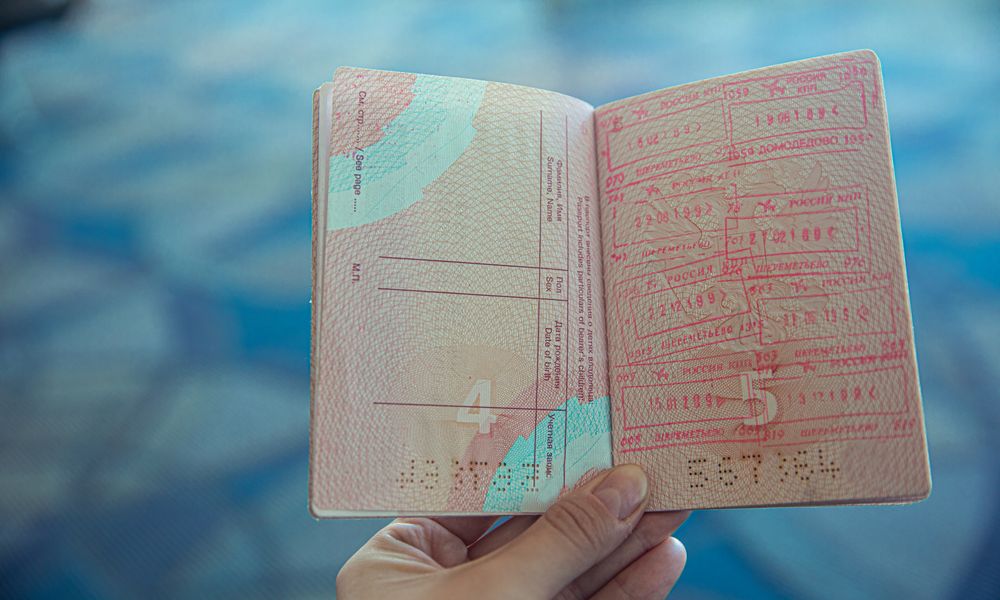
When analyzing the exact cambodia visa requirements 2026 entry rules, it is clear that the Cambodian government has prioritized strict compliance. All foreign nationals seeking entry—regardless of their eligible visa category—must possess a passport with at least six months of remaining validity from their planned date of arrival. Additionally, your passport must contain at least one completely blank page for the physical entry stamp (or the digital equivalent "v-Pass" certificate, which has begun replacing traditional full-page inked stickers in certain major ports of entry).
In addition to passport validity, Cambodian immigration authorities have increasingly enforced the requirement for proof of onward travel. Upon checking in for a flight to Cambodia or approaching a land border, you may be asked to present a confirmed return flight ticket or a validated overland bus ticket proving you intend to exit the country before your 30-day limit expires. Travelers who fail to present this documentation run a significant risk of being denied boarding by their airline. Furthermore, tourists must be prepared to demonstrate that they possess sufficient funds to support themselves during their stay. While immigration officers rarely demand physical cash proof from Western tourists, having access to digital bank statements or credit card limits is a wise precaution.
The Mandatory Cambodia e-Arrival Card System
Perhaps the most sweeping operational change to Cambodian border control in recent history is the complete implementation of the Cambodia e-Arrival Card (EAC). Initially launched as a pilot program in mid-2024, the digital e-Arrival system became fully mandatory for all air travelers on January 1, 2025, and remains strictly enforced throughout 2026. This revolutionary digital platform completely replaces three traditional physical paper documents: the immigration arrival/departure card, the health declaration form, and the customs declaration form.
All passengers flying into Cambodia's international airports must submit their e-Arrival Card electronically prior to landing. The application must be completed through the official government portal at the Cambodia e-Arrival official portal or via the official "Cambodia e-Arrival" mobile app, which is available on both iOS and Android platforms. Submission of this card is completely free of charge. Travelers are strongly urged to avoid fraudulent third-party websites that claim to "expedite" the e-Arrival Card for a fee.
The e-Arrival Card can only be submitted within the 7 days prior to your arrival date. During the application process, you will be required to upload a clear portrait photo, input your passport details, enter your flight number, select your port of entry, provide details of your local accommodation, and complete basic health and customs declarations. Once successfully submitted, the system generates a unique QR code. You must download this QR code to your smartphone or print a physical copy. Upon landing, you will scan this QR code at the designated automated immigration kiosks before proceeding to the passport control desk. While the government has installed digital tablets at airport arrival terminals for travelers who forgot to complete the form, using these on-site tablets often results in massive delays and long queues, making pre-arrival submission absolutely essential.

Visa-Free Access and Visa-on-Arrival Eligibility by Passport
Cambodia’s immigration policy divides foreign travelers into three distinct categories: those who enjoy visa-exempt entry, those who are eligible for a Visa on Arrival or electronic Visa, and those who must obtain an advance visa from a Cambodian embassy abroad. Knowing which category your passport falls under is the first step in ensuring a hassle-free journey.
Comprehensive Visa-Free Access List
Cambodia grants visa-free entry to citizens of several countries, primarily members of the Association of Southeast Asian Nations (ASEAN). If you hold an ordinary passport from one of the following nations, you can enter Cambodia without a visa for the specified durations:
- Indonesia: Up to 30 days
- Laos: Up to 30 days
- Malaysia: Up to 30 days
- Philippines: Up to 30 days
- Singapore: Up to 30 days
- Vietnam: Up to 30 days
- Maldives: Up to 30 days
- Seychelles: Up to 15 days
- Brunei: Up to 14 days
- Myanmar: Up to 14 days
- Thailand: Up to 7 days (Note: Historically, Thai citizens were granted a 14-day exemption; however, due to political tensions and security evaluations, the exemption period has been set to 7 days, with border crossings subject to heightened monitoring).
It is crucial to note that visa-free entry does not exempt you from the mandatory Cambodia e-Arrival Card system. Even if you hold an ASEAN passport and are entering visa-free, you must still submit your digital e-Arrival form within 7 days of your flight.
How to Apply for a Visa on Arrival (VoA)
For passport holders from the United States, Canada, the United Kingdom, Australia, New Zealand, the European Union, Japan, and dozens of other nations, the Visa on Arrival (VoA) remains a highly accessible entry option. This visa can be acquired directly at Cambodia's three main international gateways: Phnom Penh International Airport (PNH), Siem Reap Angkor International Airport (SAI), and Sihanoukville International Airport (KOS), as well as at major land border crossings.
To obtain a Tourist Visa on Arrival, you must proceed to the designated VoA counter before walking to the main passport control queue. The official fee for the Tourist (Type-T) Visa on Arrival is $30 USD. The most critical aspect of this process is the physical currency requirement: the fee must be paid in cash using US Dollars. Cambodia operates on a cash-heavy economy where USD is widely accepted, but the country's banking system is notoriously unforgiving regarding the physical state of foreign banknotes. The bills you present to the immigration officer must be in absolute pristine condition. If a banknote is creased, crumpled, dirty, contains any pen marks, or has even a microscopic tear, the officer will reject it outright. Travelers have frequently found themselves in highly stressful situations, having to search for working ATMs or exchange booths in the arrival hall because their USD bills were deemed imperfect. Always carry crisp, brand-new, recently printed USD bills kept flat in a protective sleeve.
Who is Not Eligible for Visa-on-Arrival?
While Cambodia's visa policies are generally welcoming, citizens of certain nations are strictly barred from obtaining a Visa on Arrival or applying for an e-Visa online. If you hold a passport from any of the following countries, you must arrange your visa in advance through a Royal Embassy or Consulate of Cambodia in your home country or a neighboring nation:
- Afghanistan
- Algeria
- Bangladesh
- Iran
- Iraq
- Nigeria
- Pakistan
- Saudi Arabia
- Sri Lanka
- Sudan
To secure a visa, passport holders from these restricted nations are typically required to submit additional documentation. This often includes a formal letter of invitation from a registered Cambodian business or sponsor, a round-trip flight ticket, proof of employment, and extensive bank statements showing sufficient funds to cover their entire stay. Processing times for these embassies can take several weeks, so early planning is mandatory.
Step-by-Step Guide to the Cambodia e-Visa: Fees, Portal, and Process
For travelers who prefer to have their immigration paperwork finalized before arriving at the border, the Cambodia e-Visa is an exceptional alternative to the Visa on Arrival. By acquiring an e-Visa in advance, you can bypass the physical VoA payment desk altogether, saving valuable time and avoiding the stress of handling pristine cash bills at the airport counter.
Cambodia e-Visa Costs and Official Channels
To apply for a Cambodia e-Visa, you must use the official government portal managed by the Ministry of Foreign Affairs and International Cooperation. The only legitimate website for this application is evisa.gov.kh. Because of the popularity of this visa, numerous copycat and unauthorized agency websites exist online, many of which mimic the official site's design to charge unsuspecting tourists double or triple the actual cost. Always double-check the URL before inputting your passport data and credit card details.
The total fee for the Tourist (Type-T) e-Visa is $36 USD. This comprises the standard $30 USD visa fee plus a $6 USD digital processing charge. The application process is straightforward:
- Navigate to the official portal and create a personal traveler account.
- Complete the digital application form by entering your personal details, passport data, and travel itinerary.
- Upload a clear scan or photograph of your passport’s bio-data page, along with a recent passport-style portrait photo featuring a plain white background.
- Submit your payment of $36 USD using a major international credit card, debit card, or supported digital payment methods.
- Wait for processing. The official processing window is 3 business days, though many travelers receive their approved visa via email within 24 to 48 hours.
- Download the approved e-Visa PDF certificate and print two physical copies. You must keep these copies with your passport; one copy will be collected by the immigration officer when you enter Cambodia, and the second copy will be collected upon your departure.
It is important to remember that the Cambodia e-Visa is only accepted at specific major entry points. If you are entering the country via an obscure land border checkpoint, you may be forced to obtain a physical visa instead. Currently, the e-Visa is accepted at:
- Phnom Penh International Airport (PNH)
- Siem Reap Angkor International Airport (SAI)
- Sihanoukville International Airport (KOS)
- Poipet Border Crossing (Banteay Meanchey Province, bordering Thailand)
- Bavet Border Crossing (Svay Rieng Province, bordering Vietnam)
- Cham Yeam Border Crossing (Koh Kong Province, bordering Thailand)
- Tropaeng Kreal Border Crossing (Stung Treng Province, bordering Laos)
The Ordinary (Type-E) Visa for Expats and Long-Term Travelers
If you are planning to live, work, retire, study, or conduct long-term research in Cambodia, a standard Tourist Visa (Type-T) is not suitable. Instead, you must secure an Ordinary Visa (Type-E). Please be extremely careful not to confuse the "Type-E" Ordinary Visa with the "e-Visa" (which is merely an online tourist visa). The Type-E Ordinary Visa can be obtained upon arrival at major airports for a fee of $35 USD, or online via the e-visa portal for $42 USD.
Initially, the Ordinary Visa is valid for a single entry and a 30-day stay. However, its primary advantage is that it can be extended indefinitely from within Cambodia. Unlike tourist visas, which can only be extended once, the Type-E visa can be extended for 3, 6, or 12 months under several specialized Extension of Stay (EOS) categories. In 2026, the General Department of Immigration enforces strict documentation requirements for these extensions, which are broken down below:
- EB (Business Extension): This is the most common extension for expats, business owners, digital nomads, and remote workers. To obtain a 6-month or 12-month EB extension in 2026, you must present a valid physical work permit, a certified employment contract from a registered Cambodian company, and tax patent documents. The historical loophole of obtaining "business" extensions without proving actual employment has been completely closed.
- ER (Retirement Extension): For expats aged 55 or older who have retired from active work. To secure this extension, you do not require a work permit, but you must present documented proof of retirement in your home country or bank statements showing a consistent pension or sufficient independent wealth to support yourself.
- ES (Student Extension): For international students enrolled in a registered, licensed educational institution in Cambodia. This requires a formal letter of enrollment from the school and proof of tuition payment.
- EG (Job-Seeking Extension): Designed for travelers who want to search for employment in Cambodia. It is typically granted for 3 or 6 months and is strictly non-renewable; if you do not find a job and secure an EB extension within that timeframe, you must exit the country.

Cambodia Border Crossings: Guidelines and Current Restrictions
While flying into Cambodia is a highly standardized process, crossing into the country via its land borders remains a highly dynamic and occasionally complex endeavor. Land borders are particularly susceptible to shifting regional dynamics, diplomatic disputes, and operational changes.
Important Document Checklist for Cambodian Entry
Before you approach any Cambodian border checkpoint, whether at a state-of-the-art airport terminal or a dusty overland frontier post, ensure you have gathered the following vital items:
- Your physical passport: Must be valid for at least 6 months past your arrival date and contain at least one completely blank visa page.
- Two printed copies of your Cambodia e-Visa: (If you chose to apply online).
- Your digital or printed Cambodia e-Arrival QR code: Replaces paper cards and must be completed within 7 days prior to arrival.
- Pristine US Dollar cash: Exactly $30 for a Type-T Visa on Arrival or $35 for a Type-E Ordinary Visa. Keep the bills completely flat, clean, and uncreased.
- Proof of onward travel: An airline or bus ticket out of Cambodia.
- Two physical passport-sized photos (4cm x 6cm): While digital photos are increasingly used, carrying physical backups is highly recommended to avoid administrative delays at remote land borders.
Overstay Penalties and Consequences in Cambodia
The Cambodian Ministry of Interior enforces immigration laws strictly. If you remain in Cambodia beyond the authorized date stamped on your visa, you will be penalized. The standard, non-negotiable fine for overstaying any Cambodian visa is $10 USD per day.
For short-term overstays of under 30 days, the process is relatively straightforward but expensive. When you arrive at the immigration counter at the airport or land border to depart the country, the officer will calculate your overstay days and demand payment in cash (USD). Once the daily fines are paid, you are permitted to clear customs and board your flight. However, overstaying for longer than 30 days is a severe offense. If you overstay by more than a month, you cannot simply pay the fine at the airport. You will be detained, subject to court proceedings, forced to leave the country at your own expense, and placed on an official immigration blacklist, which will ban you from re-entering the country for a period ranging from 1 to 5 years, or permanently in extreme cases.
To contextualize the seriousness of immigration enforcement in Cambodia, look at recent bilateral diplomatic operations. In April and May of 2026, the Cambodian government, in coordination with the Indonesian Embassy in Phnom Penh, executed a massive repatriation of 4,677 Indonesian nationals who had violated residence permit regulations. While the government made a historic decision to waive overstay fines for these individuals due to humanitarian and cyber-scam security crises, authorities emphasized that this was an exceptional bilateral action and warned that individual tourists will face the full weight of the $10-per-day fine and deportation protocols. Never let your visa lapse; always seek an extension proactively before your authorized stay expires.
Recent Geopolitical Shifts: May 2026 Updates
Land border crossings between Cambodia and its neighbors can be affected by geopolitical events. Travelers planning to enter Cambodia from Thailand in mid-2026 must be particularly alert. The long-standing territorial dispute along the 817-kilometer frontier erupted into the Cambodian-Thai border crisis in May 2025, with major military clashes, heavy artillery fire, and rocket exchanges taking place in July and December 2025. This conflict resulted in significant military casualties and the displacement of over 400,000 civilians in the border provinces.
Although a ceasefire agreement was signed on December 27, 2025, and high-level peace talks occurred at the ASEAN summit in May 2026, the border regions remain highly militarized, volatile, and subject to sporadic skirmishes. Official government travel advisories continue to highlight these dangers. The UK Foreign, Commonwealth & Development Office (FCDO) travel advisory explicitly advises British citizens against all but essential travel to within 20km of the land border with Thailand. Similarly, the US State Department Cambodia Travel Advisory advises U.S. citizens to exercise extreme caution and avoid areas within 50km of the border due to military tensions and the severe hazard of unexploded landmines. Travelers should also closely monitor the Australian Government's Smartraveller advisory for live, regional safety alerts.
Because of this ongoing instability, several land border crossings between Thailand and Cambodia have experienced sudden, unannounced closures. Popular tourist routes—such as overland travel from Bangkok to Siem Reap via the Poipet/Aranyaprathet checkpoint—are currently subject to intense security screenings, long administrative delays, and temporary shutdowns. If you are planning an overland crossing, it is crucial to verify the active, open status of the specific checkpoint on your travel date.

How to Protect Your Travel Plans with TripGuard360
Planning an international journey to Cambodia is an incredibly rewarding experience, but the reality of global travel in 2026 is that entry rules, visa fees, and border security statuses are constantly in flux. A sudden diplomatic row, a updated health directive, or an unannounced digitization of a border crossing can completely disrupt your travel itinerary with virtually no warning.
The Reality of Last-Minute Rule Shifts
Imagine the frustration: you have spent months booking boutique hotels in Siem Reap, securing flight tickets, and hiring tour guides for the temples, only to arrive at the airport and find out your airline will not let you board because Cambodia updated its e-Arrival Card portal overnight, or because the land checkpoint you planned to use has been closed due to localized border tensions. These scenarios are not hypothetical; they occur regularly to unprepared travelers.
As we frequently document in our travel safety blog, the administrative landscapes of developing nations are highly dynamic. Governments routinely adjust entry protocols, tighten work permit requirements, or update visa processing times to align with changing domestic policies. Relying on outdated internet forum posts or months-old blog articles can expose you to severe financial losses and ruined vacations.
TripGuard360's 24/7 Monitoring and Instant Alerts
This is where TripGuard360 becomes your ultimate travel companion. We believe that travelers shouldn't have to spend hours scouring obscure government websites or monitoring foreign news outlets just to stay compliant with local immigration laws. Our platform provides a proactive, automated safety net that monitors Cambodia’s immigration rules and global entry requirements 24 hours a day, 7 days a week, 365 days a year.
By registering your trip details with TripGuard360, our advanced intelligence engine constantly cross-references your planned itinerary with official government databases, embassy announcements, and local security feeds. The exact moment the Cambodian government alters its visa fees, changes the mandatory window for the e-Arrival Card, or issues a security alert near a Thai border checkpoint, TripGuard360 delivers an instant, real-time alert directly to your smartphone or email. This immediate notification gives you the crucial window needed to adjust your flight bookings, apply for alternative visas, or reroute your journey before you ever arrive at the departure gate.
While you can use our travel guides to research and design your dream vacation, relying on TripGuard360 ensures your plans are actively defended against the unexpected. Travel with absolute confidence, knowing that the world's most sophisticated travel monitoring service is watching over your journey every step of the way.
Don't let sudden bureaucratic updates or border closures turn your dream holiday into an expensive logistical nightmare. Protect your upcoming journey to the Kingdom of Wonder. Sign up for a free trial of TripGuard360 today at tripguard360.com and experience the peace of mind that comes with 24/7 real-time entry rule monitoring.