Colombia Visa Requirements 2026: Entry Rules & Fees
Understanding Colombia Visa Requirements 2026 Entry Rules
Colombia has rapidly become one of the most popular destinations in South America for international travelers, retirees, digital nomads, and business professionals. Famous for its diverse landscapes—ranging from the Andean peaks to the Caribbean coast—and cities like Medellín, Bogotá, Cartagena, and Cali, the country offers a warm welcome. However, navigating the bureaucratic landscape is essential to ensure a smooth arrival. The colombia visa requirements 2026 entry rules have undergone significant updates, reflecting the country's ongoing efforts to regulate migration, adjust to economic shifts, and streamline border controls.
For most leisure travelers, entering Colombia is a straightforward process. The nation operates a highly open border policy for tourists, offering visa-free access to citizens of over 100 countries. Yet, as the regulatory environment becomes more rigorous, understanding the exact legal framework is critical. Whether you are traveling for a quick two-week beach vacation in Cartagena, planning a multi-month exploration of the Coffee Triangle, or transitioning to remote work under the recently updated digital nomad guidelines, you must carefully review the documentation needed prior to departure. Missing even a minor form, such as the mandatory digital pre-registration, can result in being denied boarding by your airline.
To ensure you have a hassle-free journey, this guide provides a exhaustive breakdown of Colombia's entry and visa landscape. For broader context on international travel regulations, safety practices, and border compliance, you can check out our travel safety blog, or explore detailed itineraries and destination checklists across our travel guides.

Who Can Enter Colombia Visa-Free? (Visa Exemption List)
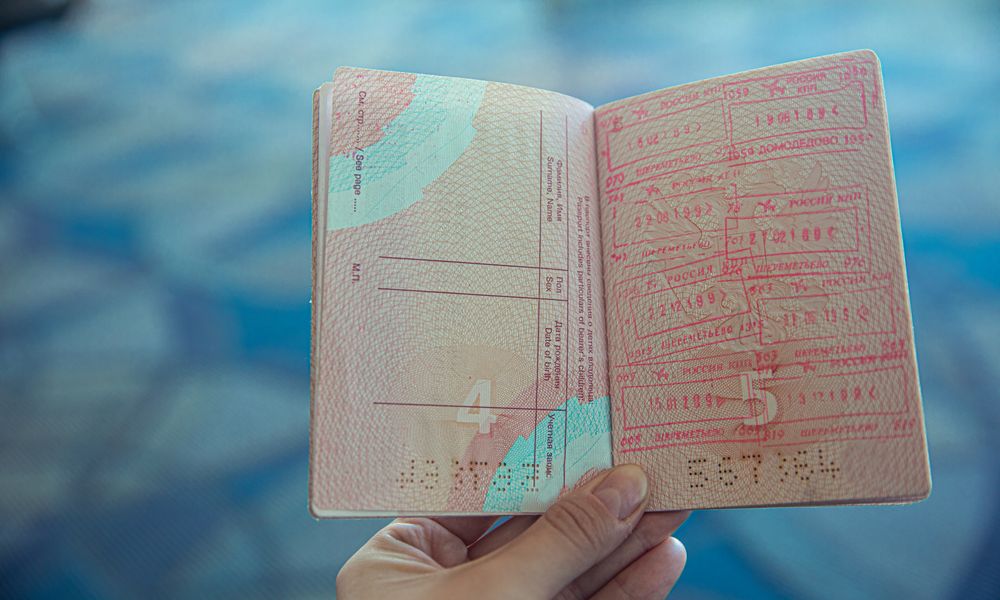
The vast majority of western travelers do not need to apply for a formal visa at a Colombian consulate prior to travel. Instead, eligible nationalities are granted a short-stay entry permit directly at the border. This permit is officially issued as a stamp in your physical passport by Migración Colombia officers at airports, land borders, or sea ports. The entry stamp is classified as a Permiso de Turismo (PT), which allows the holder to engage in non-remunerative activities such as tourism, leisure, journalistic coverage, academic events, or short-term medical treatments.
Visa-Free Nationalities for Up to 90 Days
Holders of ordinary passports from the following countries can enter Colombia visa-free for tourism or short business visits for up to 90 days:
- North America: United States, Canada, Mexico.
- Europe: All European Union member states, United Kingdom, Switzerland, Norway, Iceland, Liechtenstein, Monaco, Andorra, San Marino, Albania, Bosnia and Herzegovina, Montenegro, North Macedonia, Serbia, Georgia, Ukraine, and Moldova.
- Oceania: Australia, New Zealand, Fiji, Samoa, Solomon Islands, Papua New Guinea, Marshall Islands, Micronesia, Palau.
- Central America & Caribbean: Costa Rica, Panama, El Salvador, Guatemala, Honduras, Bahamas, Barbados, Belize, Dominica, Dominican Republic, Grenada, Jamaica, Saint Kitts and Nevis, Saint Lucia, Saint Vincent and the Grenadines, Trinidad and Tobago.
- South America: Argentina, Brazil, Chile, Ecuador, Peru, Uruguay, Paraguay, Bolivia, Guyana, Suriname. (Note: Citizens of Andean Community countries and MERCOSUR can enter using only their national ID cards, without a passport).
- Asia & Middle East: Japan, South Korea, Singapore, Hong Kong, Indonesia, Malaysia, Philippines, Taiwan, Bhutan, Brunei, Kazakhstan, Qatar, United Arab Emirates, Israel, Turkey, Azerbaijan, Mongolia.
- Africa: South Africa, Morocco, Tunisia.
Upon arrival, immigration officers typically stamp your passport with an authorized stay of 90 days. If you wish to stay longer, you can apply for an extension—known as a Prórroga de Permanencia (PTP)—online through the Migración Colombia portal. This extension grants an additional 90 days, allowing a maximum cumulative stay of 180 days per calendar year. It is important to note that the 180-day limit resets every year on January 1. Under the colombia visa requirements 2026 entry rules, the fee for this tourist stay extension has been updated to $150,000 COP for most nationalities, under the latest administrative adjustments.
Nationalities Requiring a Visitor Visa (Type V)
If your passport country is not on the visa-exempt list, you must apply for a Visitor Visa (Type V - V-TU Tourist Visa) before traveling. Some of the major nationalities that must obtain a visa prior to arrival include:
- Asia: China, India, Pakistan, Bangladesh, Vietnam, Thailand, Nepal, Sri Lanka, Iran, Iraq, Jordan, Lebanon, Syria, and most other Middle Eastern/Central Asian countries.
- Africa: Nigeria, Egypt, Kenya, Ethiopia, Ghana, Cameroon, Senegal, Algeria, and most other African nations (except South Africa, Morocco, and Tunisia).
- Caribbean: Cuba, Haiti.
Applicants from these countries must complete their visa application online via the official Colombian Ministry of Foreign Affairs (Cancillería) portal or visit their local Colombian consulate. The process requires submitting proof of financial solvency, a return flight itinerary, hotel bookings, and paying a non-refundable study fee of approximately $52 USD, followed by an issuance fee of $82 USD if approved.
Special Visa Exemption for Belarus (New 2026 Rule)
Following a bilateral agreement signed between the respective governments, Colombia and Belarus officially implemented a mutual short-stay tourist visa exemption. Under this regulation, citizens of Belarus holding valid ordinary passports are permitted to enter, exit, and transit through Colombia without a visa for stays of up to 90 days within any 180-day period. This represents a significant shift in mobility for Eastern European travelers and reduces administrative hurdles for cross-border visits.

Crucial Document Checklist & Mandatory Entry Requirements
Even if you qualify for visa-free entry, you must present several documents at the border to satisfy Migración Colombia. Border officials have the legal authority to deny entry to any traveler who fails to provide these documents or who shows signs of intending to overstay their welcome. Ensure you have physical printouts or easily accessible digital copies of the following items before your flight.
The Mandatory Check-Mig Form: Entry and Exit Rules
The absolute most common reason travelers face delays or denied boarding at departure airports is failing to complete the Check-Mig form. This digital pre-registration form must be submitted online by all travelers (both foreign nationals and Colombian citizens) entering or exiting Colombia by air.
Key guidelines for completing the form:
- Timing: You must submit the form between 72 hours and 1 hour before your flight's scheduled departure time.
- Cost: The Check-Mig form is completely free of charge. Travelers must be highly cautious of third-party scam websites that charge fees of up to $70 USD to fill out the form on their behalf. Always use the official Migración Colombia Check-Mig Portal.
- Process: The form requires entering your flight details (airline, flight number, date), passport information, accommodation address in Colombia, and basic health declarations. Once completed, a PDF confirmation with a barcode will be sent to your email. You must present this barcode to the airline at check-in and to the immigration officer at the border.
Passport Validity and Physical Condition Standards
To enter Colombia, your passport must meet strict international standards as outlined by aviation and immigration policies. Your passport must be valid for at least 6 months beyond your planned date of entry into Colombia. For example, if you enter Colombia on June 1, 2026, your passport should not expire before December 1, 2026.
Furthermore, immigration officers are particularly strict regarding the physical condition of passports. If your passport has significant water damage, torn pages, loose bindings, or a damaged biographical data page, you run an extremely high risk of being turned back at the border. Always carry a machine-readable or biometric passport with at least two blank pages for entry and exit stamps.
Onward Travel, Accommodation, and Proof of Funds
Under the updated colombia visa requirements 2026 entry rules, border control officers are increasingly auditing tourists' return tickets and financial support. Be prepared to present:
- An Onward or Return Ticket: You must show proof that you plan to exit the country before your initial 90-day tourist permit expires. This can be a return flight to your home country or a bus/flight ticket to another onward destination. The airline will almost always refuse to board you if you do not possess a return ticket.
- Proof of Accommodation: You must provide the physical address and name of your hotel, hostel, or rental apartment. If you are staying with friends or family, you should have their Colombian national ID (Cédula) number, phone number, and home address ready.
- Proof of Financial Solvency: While not requested for every single traveler, officers have the right to ask for evidence that you can support yourself during your stay. This can be demonstrated by showing a valid credit card, physical cash, or recent bank statements on your phone showing sufficient funds.
Yellow Fever and Health Requirements
Currently, Colombia does not enforce any COVID-19 testing or vaccination requirements. However, there are strict rules regarding Yellow Fever vaccinations. According to guidelines aligned with the U.S. Centers for Disease Control and Prevention (CDC), proof of yellow fever vaccination is mandatory for travelers over 1 year of age arriving from countries with risk of yellow fever transmission, as well as those transitioning through airports for more than 12 hours in countries like Brazil, Angola, the Democratic Republic of the Congo, or Uganda.
Additionally, if you plan to travel within Colombia to high-risk eco-tourism zones—such as the Amazon department, Tayrona National Park, the Sierra Nevada de Santa Marta, Putumayo, or various national reserves—you are highly advised (and sometimes required by local park rangers) to have the vaccine. The shot must be administered at least 10 days prior to entering these areas.

Recent Colombia Visa Requirements 2026 Entry Rules Changes
The regulatory climate in Colombia has shifted noticeably. Following years of rapid expat influx and digital nomad expansion, the Colombian Ministry of Foreign Affairs (Cancillería) and Migración Colombia have tightened controls. These changes are designed to formalize long-term stays, protect local labor, and adjust administrative fees to track domestic economic indicators.
The 23.7% Minimum Wage Hike and Visa Thresholds
Under Colombian decrees, the country's Legal Monthly Minimum Wage—known as the Salario Mínimo Legal Mensual Vigente (SMLMV)—was set at $1,750,905 COP (approximately $467 USD based on current exchange rates). This represents an unprecedented 23.7% increase compared to previous years. Because the financial requirements for almost all Colombian visas are legally tied to the SMLMV, the minimum income thresholds for residency, digital nomad, retirement, and student visas have risen sharply.
The revised financial requirements for the most popular visa types include:
| Visa Category | Required SMLMV Multiple | Required Monthly Income (COP) | Approximate Monthly Income (USD) |
|---|---|---|---|
| V-Nomadas Digitales (Digital Nomad) | 3 SMLMV | $5,252,715 COP | ~$1,400 USD |
| M-Pensionado (Retirement/Pension) | 3 SMLMV | $5,252,715 COP | ~$1,400 USD |
| M-Rentista (Passive Income) | 10 SMLMV | $17,509,050 COP | ~$4,700 USD |
| M-Propietario (Real Estate Investor) | 350 SMLMV (Property Value) | $612,816,750 COP | ~$163,000 USD |
| M-Socio (Business Investor) | 100 SMLMV (Company Capital) | $175,090,500 COP | ~$47,000 USD |
To qualify for these visas, you must prove this income using bank statements from the last 3 to 6 months, tax certificates, or official contracts. The Cancillería will reject applications that do not strictly meet these new figures, and they do not allow "averaging" across months; your income must meet or exceed the limit in every single statement provided.
Migración Colombia Resolution 0599 and New Fees
In addition to visa criteria, the government issued Resolution 0599, which updates all administrative immigration service fees inside Colombia. If you are applying for extensions or processing residency documents on Colombian soil, the new rates apply:
- Prórroga de Permanencia (PTP / Stay Extension): Updated to $150,000 COP.
- Cédula de Extranjería (Foreigner ID Card): Now costs $294,000 COP. (This physical card is mandatory for all foreigners holding a visa valid for more than 3 months and must be applied for within 15 calendar days of visa approval or entry into the country).
- Salvoconducto (Safe Conduct - SC-2): Set at $88,000 COP. This temporary stay permit is required if your visa has expired or been denied, giving you a small window to leave the country legally.
- Certificate of Migratory Movements: Now costs $89,000 COP, frequently required for citizenship and naturalization applications.
- Automatic Migration Registration (Biometric gates): Adjusted to $421,000 COP for expedited passage at major airports.
May 2026 Degree Convalidation & License Enforcement
For foreign professionals, consultants, and corporate employees residing in Colombia on work or service visas (Type M or Type V), the Ministry of Foreign Affairs has implemented strict vetting policies. There is an active nationwide crackdown on the practice of working under temporary professional licenses.
If you are renewing a professional visa or applying for a new one, the authorities now increasingly require proof of degree validation ("convalidation") through the Ministry of Education and a permanent professional license issued by the corresponding professional board in Colombia. Temporary permits are no longer routinely accepted. If your assignment is scheduled to exceed 12 months, you must plan for this legalization and apostille process months in advance to avoid sudden visa rejections or administrative delays.
Overstay Penalties, Border Crossings, and Transit Rules
Adhering strictly to the authorized days stamped in your passport is paramount. Colombia has significantly digitized its migratory records, making it almost impossible to leave the country with an overstay without being flagged at passport control.
Overstay Penalties & Salvoconducto
If you overstay your 90-day tourist stamp or your approved 90-day extension, you will be subject to an administrative fine upon departure. The fine is calculated based on the length of your overstay and can range from $350,000 COP to upwards of several million pesos (often equivalent to $100 to $1,000+ USD).
To depart legally, you must go through an immigration sanction process:
- You must visit a Migración Colombia service center (Centro Facilitador de Servicios Migratorios) in a major city, or handle the process at the airport migration office prior to departure. (Arriving at the airport with an overstay on the day of your flight is highly discouraged, as the resolution process can take several hours, causing you to miss your flight).
- Migración Colombia will issue an official resolution detailing your fine. You must pay this fine at an authorized bank or via credit card.
- You will be issued a Salvoconducto (SC-2) document, which grants you a temporary window of 5 to 30 days to legally exit the country.
- Severe or repeat overstays can result in formal deportation, which carries a multi-year ban on re-entering Colombia.
Border Crossing Rules (Land, Air, and Sea)
Colombia shares land borders with Venezuela, Ecuador, Peru, Brazil, and Panama. When entering or leaving via land borders, you must ensure you obtain the physical exit stamp from the neighboring country and the entry stamp from Migración Colombia on the same day.
Special border cautions:
- Venezuela Border: While some border checkpoints (such as the Tienditas, Simón Bolívar, and Francisco de Paula Santander bridges near Cúcuta) are open, travelers are advised by western government travel advisories, such as the U.S. Department of State, to exercise extreme caution or avoid the immediate border region entirely due to security concerns, crime, and sudden closures.
- Ecuador Border: The Rumichaca border crossing near Ipiales is the busiest land crossing. It is generally safe and well-regulated, but you must complete your Check-Mig form and physically visit both migration offices. Be aware that the Check-Mig form is officially required for land borders as well when cross-border protocols are fully active.
- Panama Border: There are no land roads connecting Colombia and Panama through the Darién Gap. Crossing the Darién Gap on foot is extremely dangerous, illegal, and highly discouraged. Travel between Panama and Colombia must be done via air or authorized maritime vessels (such as sailing tours between Cartagena/Capurganá and the San Blas Islands), which require formal immigration processing at designated ports of entry.
Airport Transit Visa Requirements
If you are transiting through a Colombian airport (such as El Dorado International in Bogotá) to catch a connecting flight to another country, you generally do not need a visa, provided that:
- Your connection is scheduled for less than 24 hours.
- You remain within the international transit area of the airport.
- Your baggage is checked through to your final destination, meaning you do not need to clear immigration, collect your bags, and check in again.
If your transit requires you to exit the international transit zone to re-check baggage, change airports, or stay overnight in a hotel outside the terminal, you must meet the standard colombia visa requirements 2026 entry rules. This means you will clear passport control, get a tourist stamp, and must present a completed Check-Mig form. If your nationality is not visa-exempt, you must obtain a transit visa or tourist visa in advance.
What to Do If Rules Change After Booking Your Trip
Travel regulations are inherently dynamic. In an era of shifting geopolitical alignments, economic updates, and public health directives, entry rules can change overnight. If you have already booked your flights, accommodation, and tours to Colombia, and find out that visa fees have risen, a new form has been introduced, or passport validity rules have changed, do not panic. Follow these strategic steps:
- Verify the Source: Do not rely on rumors in Facebook expat groups or travel forums. Immediately cross-reference the information with official government channels, such as the Ministerio de Relaciones Exteriores de Colombia or your home country's embassy in Bogotá.
- Contact Your Airline: Airlines are legally responsible for verifying entry eligibility before boarding. If a rule has changed, contact your airline's support desk to verify if they have updated their check-in requirements.
- Adjust Your Paperwork: If a new document is required, gather it immediately. If the passport validity rule has been tightened and your passport is close to the 6-month limit, seek expedited passport renewal services in your home country before departure.
To protect your travel investment, it is highly recommended to secure comprehensive travel insurance that includes a "Cancel for Any Reason" (CFAR) clause. This ensures that if sudden diplomatic changes or visa denials occur, you can recoup a substantial portion of your non-refundable booking expenses.
How TripGuard360 Keeps You Safe and Compliant
Navigating the complex, ever-shifting landscape of international travel requirements is one of the most stressful parts of planning a trip. A rule change that happens while you are mid-flight or after you have spent thousands of dollars on non-refundable bookings can ruin your vacation or business trip. This is where TripGuard360 provides unparalleled peace of mind.
Our platform utilizes cutting-edge Gemini AI technology to monitor global visa policies, health mandates, customs regulations, and border entry requirements 24 hours a day, 7 days a week. By directly scanning and parsing official consular updates, government decrees, and international health advisories in real-time, TripGuard360 eliminates the need for you to manually track bureaucratic announcements.
When you register your upcoming itinerary with TripGuard360, our system actively watches your destination. The moment Colombia or any other country on your route updates its entry requirements—whether it is an increase in visa fees, a modification to the Check-Mig registration window, an update to vaccination mandates, or a change in passport validity criteria—you will receive an instant alert via Telegram and email. By delivering immediate, actionable notifications directly to your phone, TripGuard360 ensures you are never caught off guard at the border, giving you ample time to adjust your documents and travel with absolute confidence.