Ecuador Visa Requirements 2026: Full Entry Rules & Fees
Introduction to Ecuador Visa Requirements 2026 Entry Rules
Ecuador continues to attract millions of visitors worldwide, ranging from backpackers hiking the volcanic ridges of Cotopaxi to remote workers settling in the cultural hubs of Cuenca and Quito. However, the legal landscape for entering this South American gem has shifted drastically over the past two years. Navigating the ecuador visa requirements 2026 entry rules is no longer a simple matter of showing up at the airport and receiving a stamp. In May 2026, amid ongoing national security adjustments, regional states of emergency, and the digitization of immigration frameworks, travelers face a tightly regulated system. From digital customs forms to strict land-border controls and updated income thresholds, understanding these regulations is vital to avoid being turned back at the border.
The Ecuadorian government under President Daniel Noboa has prioritized safety and migration control, introducing a series of rules designed to monitor who enters and exits the country. This comprehensive guide serves as your definitive roadmap for traveling to Ecuador in 2026. Whether you are traveling for a two-week vacation, looking to work remotely, or planning a long-term relocation, this article breaks down every single requirement. To ensure your trip is completely hassle-free, we suggest reading our travel safety blog alongside this guide to keep yourself informed of regional safety nuances and ongoing travel developments.
Visa-Free vs. Visa-Required Nationalities
For the vast majority of international travelers, entering Ecuador remains highly accessible. Citizens of North America, Europe, Oceania, and many Asian and South American countries can travel to Ecuador under the visa-exempt status for short-term tourism, family visits, or brief business engagements. Under the current 2026 rules, citizens of the following countries do not require an advance visa to enter Ecuador for tourist stays of up to 90 days:
- North America: United States, Canada, Mexico.
- Europe: All European Union member states (Germany, France, Italy, Spain, Netherlands, etc.), United Kingdom, Switzerland, Norway, Iceland, Liechtenstein, Andorra, Monaco, San Marino.
- Oceania: Australia, New Zealand.
- South America: Argentina, Bolivia, Brazil, Chile, Colombia, Paraguay, Peru, Uruguay. It is important to note that citizens of these Andean and South American nations can enter Ecuador using only their national ID card, though carrying a passport is strongly recommended for security checks.
- Asia & Middle East: Japan, South Korea, Singapore, Israel, United Arab Emirates, Qatar.
If your passport is issued by one of the countries above, you do not need to submit paperwork to an embassy before your trip. Your entry is processed directly at the airport or border control. However, you must still comply with the general entry rules, including holding a passport with a minimum of six months of validity remaining, a confirmed return ticket, and the newly mandatory digital customs registration.
The 90-Day Tourist Stamp (T-3 Permit)
If your nationality qualifies for visa-free entry, your passport will be stamped upon arrival with a T-3 Tourist Stamp (also referred to as a tourist permit). This stamp grants you a maximum of 90 days of legal stay within a 12-month period. It is critical to understand how the Ecuadorian immigration system calculates these 90 days. Unlike some countries where the visa clock resets upon a brief exit and re-entry, Ecuador tracks your stay cumulatively within a rolling 12-month "chronological year."
For example, if you enter Ecuador on January 1, 2026, and depart on February 15, 2026, you have consumed 45 days of your allowance. If you return to Ecuador on June 1, 2026, your remaining allowance is not 90 days—it is exactly 45 days. This cumulative tracking has completely dismantled the popular "Border-Run Myth" in the expat community. Many historical travel blogs advised travelers to take a quick weekend trip to Tumbes, Peru, or Ipiales, Colombia, to reset their tourist permits. In 2026, a border run does not reset your tourist clock. Doing so will result in immediate denial of re-entry if your cumulative 90-day limit has already been met.
If you wish to stay in Ecuador beyond your initial 90-day permit without acquiring residency, you must apply for a Tourist Visa Extension (Prórroga). The extension rules are very strict and require meticulous adherence to timelines:
- You must apply for the extension between days 80 and 90 of your tourist stay. Applying after day 90 is considered an overstay and will trigger a substantial fine.
- The extension grants an additional 90 days, allowing for a maximum of 180 total days in the country per chronological year.
- The cost of the tourist visa extension is set at exactly one-third of the Unified Basic Salary (SBU). For 2026, the SBU has been officially established at $482, making the official extension fee $160.67. There is also a small bank processing fee of approximately $0.57.
- The extension application must be completed online through the Servicio de Apoyo Migratorio portal, and the fee is paid at designated banks within Ecuador, such as Banco del Pacífico.

Ecuador Visa Requirements 2026 Entry Rules for Restricted Nationalities
While Ecuador is famously welcoming, specific geopolitical and migration trends have led to the implementation of strict visa requirements for citizens of 45+ countries. If you hold a passport from one of these restricted nations, you must obtain an advance visa before traveling to Ecuador, even if you are only visiting for a short vacation or transit.
A major regulatory change occurred when Ecuador officially suspended its bilateral agreement with China, requiring Chinese nationals to obtain a visa prior to arrival due to irregular migration flows. This policy remains heavily enforced throughout 2026. Below is the definitive list of restricted nationalities that require a Temporary Visitor Visa (Tourist Visa) to enter Ecuador:
- Asia & Middle East: Afghanistan, Bangladesh, China, India, Iran, Iraq, Macao, Myanmar (Burma), Nepal, North Korea, Pakistan, Philippines, Sri Lanka, Syria, Taiwan, Tajikistan, Uzbekistan, Vietnam, Yemen.
- Africa: Angola, Cameroon, Chad, Republic of the Congo, Democratic Republic of the Congo, Côte d'Ivoire (Ivory Coast), Egypt, Eritrea, Ethiopia, Gambia, Ghana, Guinea, Guinea-Bissau, Kenya, Libya, Mali, Mauritania, Nigeria, Senegal, Sierra Leone, Somalia, South Sudan, Sudan.
- Americas & Caribbean: Cuba, Haiti, Venezuela (special humanitarian and temporary visa rules apply to Venezuelan citizens due to the ongoing regional crisis).
- Europe: Albania.
It is a common misconception that holding a US Green Card or a European residency permit exempts a traveler from these rules. Ecuador's immigration department bases visa requirements strictly on the passport nationality of the traveler. If you are a citizen of India living in New York with a valid Green Card, you still require an advance Ecuadorian visa to board your flight to Quito or Guayaquil. The Green Card serves as proof of your legal status in the country of application, but it does not replace the passport requirement.
Step-by-Step E-Visa Application Process
For travelers who belong to the restricted nationalities list, or for those applying for a residency visa (such as the professional, pensioner, or digital nomad visas), 2026 marks a major technological milestone: in-person visa applications at immigration offices inside Ecuador have been completely eliminated. All visa processes must now be completed online through the official Ecuadorian E-Visa platform.
Here is the step-by-step process to apply for an Ecuadorian visa:
- Prepare Your Digital Dossier: Gather all required documents and scan them into high-quality PDF format. Ensure each file is under 1MB and clearly named according to its content (e.g., Passport_Page.pdf, Bank_Statements.pdf).
- Register on the E-Visa Portal: Visit the official Ministry of Foreign Affairs (Cancillería) E-Visa portal and create a personal account using a valid email address.
- Select Your Visa Category: Choose between a Tourism Visa (Visas de Turismo / Visitante Temporal) or one of the Residency Visas (Visas de Residencia Temporal).
- Fill Out the Application Form: Enter your personal details, travel dates, passport information, and the address of your primary accommodation in Ecuador.
- Upload Documents: Submit your scanned passport, certified translations, criminal records, proof of income, and passport-sized photo (JPEG format, 2x2 inches, white background, neutral expression).
- Pay the Review Fee: Submit the mandatory $50 non-refundable application review fee. This must be paid via a secure online credit/debit card gateway or an international bank transfer.
- Consular Review and Interview: An immigration officer will review your file. If any document is incorrect or missing, you have exactly 10 business days to upload the correct file. You may be scheduled for a brief online video interview via Microsoft Teams or Zoom to verify the purpose of your trip.
- Visa Issuance and Final Payment: Once approved, you will receive an email instruction to pay the visa grant fee. For a tourist visa, this is $30; for a residency visa, it is $270.
- Receive Your E-Visa: The approved visa will be emailed to you as a PDF containing a secure QR code. Print this document and carry it alongside your physical passport when traveling.
Ecuadorian E-Visa Processing Times and Government Fees
The financial commitment and waiting period vary significantly depending on the visa category. It is essential to plan well in advance to avoid disrupting your travel plans. Below is the breakdown of official government fees and processing times for 2026:
- Tourist Visa (Restricted Nationalities): $50 review fee + $30 grant fee = $80 total. Processing time: 15 to 30 days.
- Professional Visa (for university degree holders): $50 review fee + $270 grant fee = $320 total. Requires proof of a recognized degree. Processing time: 2 to 3 months.
- Pensioner Visa (for retirees): $50 review fee + $270 grant fee = $320 total. Requires a minimum guaranteed monthly pension of three times the SBU, which in 2026 translates to $1,446 per month. Processing time: 3 to 4 months.
- Rentista Visa (passive income from investments/property): $50 review fee + $270 grant fee = $320 total. Requires guaranteed passive income of $1,446 per month. Processing time: 3 to 4 months.
- Digital Nomad Visa (remote workers employed outside Ecuador): $50 review fee + $270 grant fee = $320 total. Requires proof of remote employment and a stable income of $1,446 per month. Processing time: 2 to 3 months.
- Investor Visa (real estate or bank certificate investment): $50 review fee + $500 grant fee = $550 total. Requires a minimum investment equal to 100 times the SBU, which is $48,200 in 2026. Processing time: 3 to 4 months.
- Dependent Visa (for spouses or children of visa holders): $50 review fee + $270 grant fee = $320 total per dependent. The main sponsor must demonstrate an additional $250 per month in income per dependent. Processing time: 2 to 3 months.
While government fees are relatively straightforward, travelers often underestimate the auxiliary expenses required to make documents legally valid in Ecuador. Any official document issued outside of Ecuador (FBI background check, marriage certificates, birth certificates, university diplomas) must be apostilled by the issuing authority. In the U.S., this costs $20 to $100 per document. Additionally, all non-Spanish documents must be translated by a certified translator in Ecuador, and the translation page must be notarized. Budget an additional $200 to $600 on top of government fees to cover these legalizations.
Required Documents for All Travelers Entering Ecuador
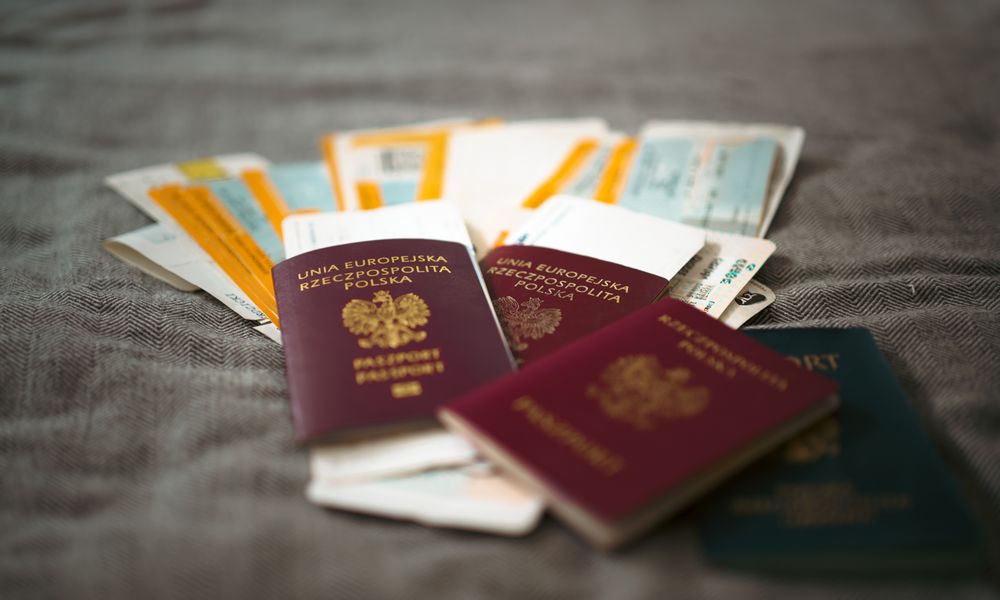
Even if you are traveling visa-exempt, you must present several documents at the border control to be granted entry. The Ecuadorian Migration Department reserves the right to deny entry to any traveler who fails to provide these foundational items:
- Passport Validity: Your passport must have at least six (6) months of validity remaining beyond your planned date of departure from Ecuador. Furthermore, it must contain at least one blank page for entry and exit stamps. If your passport is nearing its expiration date, renew it before traveling to avoid being denied boarding by your airline.
- Return or Onward Ticket: Tourists must prove they intend to leave the country within their authorized 90-day stay. Immigration officers frequently demand to see a printed or digital return airline ticket or a bus/flight ticket to a neighboring country (such as Peru or Colombia).
- Proof of Financial Sufficiency: You may be asked to prove that you have the financial means to support yourself during your stay. This can be demonstrated by showing active credit cards, recent bank statements from the last three months, or carrying sufficient cash. It is recommended to have access to at least $50 USD per day of planned stay.
- Accommodation Address: You must provide a physical address of where you will be staying. This can be a hotel booking confirmation, an Airbnb receipt, or a formal letter of invitation from a legal resident of Ecuador.
- Vaccinations: Currently, Ecuador has abolished all COVID-19 vaccination and testing mandates for incoming international travelers. However, a Yellow Fever Vaccination Certificate remains a critical requirement if you are arriving from, or have transited through, a country with yellow fever transmission risks. It is also strongly recommended if you plan to travel into the Ecuadorian Amazon region. You can check the latest health guidelines on the official CDC Travelers' Health portal before your departure.
Mandatory Digital Customs Registration (FRA Form)
One of the most critical entry rules implemented in late 2025 and fully operational in 2026 is the mandatory Digital Customs Registration Form (FRA - Formulario de Registro Aduanero). Every single passenger entering or exiting Ecuador by air, land, or maritime routes must complete this form digitally prior to travel. This applies to both foreign tourists and returning Ecuadorian citizens, with no exceptions for minors or transit passengers.
The FRA must be completed online up to 3 days (72 hours) before your scheduled departure. To fill it out, you must visit the official Ecuadorian Customs portal, fill out your flight details, passport info, and declare whether you are carrying goods or cash exceeding $10,000. Once submitted, the system will generate a unique QR code. You must present this QR code (either printed or on your smartphone) to the customs authorities before being permitted to clear immigration. Failing to complete the FRA can result in severe boarding delays, detailed physical luggage inspections, and potential fines of up to 30% of the value of undeclared items.
Special Entry Requirements for the Galapagos Islands
The Galapagos Islands are an ecologically sensitive province of Ecuador, and entering them requires passing through a separate, highly stringent biosecurity and immigration check before you can leave mainland airports in Quito or Guayaquil. To visit the Galapagos, you must complete the following steps:
- Transit Control Card (TCT): Before checking in for your domestic flight to Baltra or San Cristóbal, you must register online and pay for the TCT (Tarjeta de Control de Tránsito). The TCT fee is $20 USD and must be paid online via credit card.
- Biosecurity Inspection (ABG): Your luggage must go through a specialized biosecurity scanning station at the mainland airport. The Agencia de Regulación y Control de la Biosecuridad para Galápagos (ABG) inspects bags to ensure no organic material, seeds, soil, fruits, or animals are introduced to the archipelago. Once cleared, your bags will be sealed with a security plastic tag.
- Galapagos National Park Entry Fee: Upon landing in the Galapagos, you must pay the National Park entry fee in cash (US Dollars are the official currency of Ecuador). To support environmental conservation, the government increased this fee significantly: it is now $200 USD for foreign adult tourists and $100 USD for children under 12.
- Sworn Declaration Form: All travelers aged 18 and older must complete a digital biosecurity sworn declaration on the day of their Galapagos flight.
Always monitor the official U.S. Department of State Travel Advisory for Ecuador to check for any sudden changes to Galapagos conservation rules or mainland transport restrictions.

Land Border Crossings and Crime Prevention Mandates
For overland travelers traversing the Pan-American Highway through South America, crossing into Ecuador via land borders from Colombia (at the Rumichaca crossing near Ipiales) or Peru (at the Huaquillas crossing near Tumbes) presents unique legal and safety challenges. First, it is vital to acknowledge the security warnings. Major global travel agencies, including the British FCDO Travel Advice for Ecuador, warn travelers to avoid all non-essential travel within 20 kilometers of the Colombian border due to cartel-related violence and drug-trafficking routes. While the official border checkpoints themselves are heavily guarded and operational, the surrounding highways require extreme vigilance.
The Criminal Background Check Rule for Land Borders
In response to rising localized security concerns, the Ecuadorian government enforces a strict criminal background check requirement for all foreign nationals entering the country via land border crossings from Colombia and Peru. Under this rule, every foreigner entering Ecuador by land must present an apostilled or legalized criminal record certificate showing they have no criminal history. This certificate must cover any country where the traveler has resided for the past five years.
For US, UK, and Canadian citizens, this is an incredibly burdensome requirement for casual tourists. For instance, a US citizen would need to obtain an FBI background check, send it to the US Department of State in Washington D.C. for an apostille, and then have it legally translated into Spanish. Recognizing that this rule could cripple overland tourism, the Ministry of Tourism created an alternative exceptional authorization pathway. If you are a genuine tourist crossing by land and do not possess an apostilled police record, you must email a request at least 48 hours in advance to ayuda.turistas@turismo.gob.ec. Your email must include:
- Your exact date and border crossing point of entry.
- Your scheduled departure date from Ecuador.
- A clear scanned copy of your passport.
- A detailed itinerary of your planned activities in the country.
- PDF copies of your legally registered hotel/Airbnb reservations or tour operator bookings.
Upon receiving your request, the Ministry of Tourism will email you an exceptional entry authorization. You must print this document and present it to the immigration officer at Rumichaca or Huaquillas to bypass the background check requirement. Enforcement of this rule at land border points can be inconsistent. Some travelers report immigration officers passing them through with standard stamps, while others have been flatly rejected, forcing them to turn back. Relying on luck is highly dangerous; always secure either the apostilled background check or the exceptional tourist authorization before attempting an overland crossing.
Transit Visa Requirements and Overstay Penalties
If you are merely transiting through Ecuador to reach another destination, or if you make a mistake on your tourist timelines, you must remain aware of recent regulatory updates and financial penalties. Under the transit visa policy, any traveler who holds a passport from one of the 45+ restricted nationalities (such as India, China, or Cuba) is required to hold a valid Transit Visa to transit through Ecuadorian airports, even if they do not pass through customs or leave the terminal. If you are from a visa-exempt country (like the US, UK, or Canada), you do not need a transit visa for layovers under 24 hours.
Ecuador's immigration department takes overstays very seriously. If you exceed the authorized days on your T-3 Tourist Stamp or your Tourist Visa Extension, you will face the following consequences:
- Administrative Fine: You will be fined exactly 50% of the Unified Basic Salary (SBU). In 2026, this fine is $241 USD.
- The 30-Day Window: Upon your overstay being logged, you are granted a 30-day grace period to pay the fine and either regulate your visa status (by applying for a residency visa) or exit the country.
- The 2-Year Re-entry Ban: If you leave the country without paying your overstay fine, or if you refuse to regulate your status within the 30-day window, you will receive an immediate two-year ban on re-entering Ecuador.
- Deportation Risks: If you are stopped by local police during a routine security checkpoint (which have increased due to the 2026 State of Emergency and curfews) and found to have an expired visa without an active regulation process, you can be placed in immigration detention and deported at your own expense.

How TripGuard360 Keeps You Ahead of Changing Rules
As the security and administrative environment in Ecuador continues to shift in response to the President's public safety plans, rules can change overnight. In May 2026, regional curfews are active across nine provinces—including Pichincha (where Quito is located) and Guayas (home to Guayaquil). While travelers with active flight tickets are exempt from curfew restrictions, checkpoint rules, health declarations, and land border mandates can change with zero notice. To help you plan your journey and keep track of other regional guidelines across the continent, you can consult our travel guides for step-by-step breakdowns of every country's latest requirements.
This is where TripGuard360 becomes an indispensable asset for your travels. Rather than spending hours scrolling through fragmented expat forums, confusing government websites, or outdated blogs, TripGuard360 provides a centralized, automated safety and visa monitoring ecosystem. Our platform utilizes advanced Gemini AI technology to continuously scan official consular portals, global travel databases, and travel warnings from organizations like the Smartraveller Ecuador Travel Advisory, FCDO, and the U.S. State Department 24/7.
The moment the Ecuadorian Ministry of Interior, Customs, or Ministry of Tourism updates its entry rules, changes the SBU fee thresholds, adjusts curfew hours, or alters land border background check protocols, TripGuard360's AI detects it instantly. The platform immediately sends instant Telegram and email alerts to our users. This means if a new digital form is introduced, or if a state of emergency alters airport access rules after you have booked your flights, you will know immediately—allowing you to adjust your paperwork, apply for necessary authorizations, and avoid being caught off guard or denied boarding at the gate.
What to Do If Rules Change After Booking Your Trip
If you have already purchased your tickets to Ecuador and a rule change occurs prior to your departure, take the following structured approach to protect your travel plans:
- Verify the Source: Do not panic based on Facebook group rumors. Check your TripGuard360 alerts or visit the official Ecuadorian Ministry of Foreign Affairs portal to read the exact text of the decree.
- Contact Your Airline: Airlines are legally responsible for verifying entry requirements before boarding. They will have the most immediate operational guidelines on whether a new form (like the FRA) is required to present at the boarding gate.
- Engage a Professional: If you are applying for a residency visa and SBU income requirements rise, consult a verified immigration firm to see if your pending application is grandfathered under old rules.
- Prepare Backup Paperwork: When traveling during states of emergency or policy transitions, always carry printed, physical copies of your passport photo page, your entry stamp (if re-entering), hotel reservations, and return flight confirmations. Having physical proof of your itinerary often defuses confusing encounters at border checkpoints.
By taking a structured, proactive approach and using automated monitoring tools like TripGuard360, you can confidently explore the spectacular diversity of Ecuador, safe in the knowledge that your legal and physical security is completely protected.