Is Ghana Safe for Solo Female Travellers in 2026? Raw Truth
Is Ghana Safe for Solo Female Travellers 2026? A Raw and Realistic Evaluation
Ghana has long been championed as the "Gateway to Africa," a vibrant, culturally rich nation that represents one of the most stable and welcoming entry points to the West African continent. For solo female travellers, the prospect of navigating Accra's energetic markets, walking the historical battlements of Cape Coast, and searching for wild elephants in Mole National Park is incredibly enticing. But beneath the warm smiles and the infectious rhythms of highlife music lies a complex safety landscape that requires clear eyes, sharp instincts, and rigorous planning. If you are planning a solo trip this year, you are likely asking: is ghana safe for solo female travellers 2026?
Let's address this directly and without sugarcoating the risks: Ghana is generally safe compared to many of its regional neighbours, but it is not a destination where you can afford to let your guard down. Solo female travellers in Ghana face a distinct set of challenges—ranging from persistent, exhausting street harassment to opportunistic physical crimes, complex digital scams, and regional instability in border zones. To have a safe and transformative experience, you must understand the ground realities, learn how to navigate local social norms, and know exactly what to do when conditions change.
This comprehensive, honest guide is designed to give you the unvarnished truth. We will dissect the safety statistics, highlight the exact urban neighbourhoods to avoid, map out nighttime transit strategies, compare local versus tourist dress codes, and outline how to handle everything from pushy vendors to medical emergencies. Our goal is not to frighten you, but to empower you with the practical, actionable knowledge needed to explore Ghana confidently and securely. For more foundational advice on staying secure abroad, feel free to explore our travel safety blog and consult our travel guides for deep dives into neighbouring destinations.
Government Travel Advisories and the 2026 Security Landscape
When assessing safety, your first stop should always be official government assessments. As of mid-2026, major global authorities maintain a posture of heightened vigilance regarding Ghana. The U.S. Department of State's Ghana Travel Advisory classifies the country at Level 2: Exercise Increased Caution, citing specific threats related to crime and violence targeted against women travellers, as well as risks to LGBTQ+ individuals. Meanwhile, the UK Foreign, Commonwealth & Development Office (FCDO) travel advice and the Australian Government's Smartraveller portal echo these sentiments, advising travellers to maintain a high degree of personal security awareness, particularly in crowded urban areas and near international borders.
The 2026 security environment on the ground reflects a country dealing with severe economic pressures, including high inflation and currency fluctuations. While Ghana remains politically stable—especially compared to some of its West African neighbours currently experiencing military transitions or civil conflicts—the economic strain has led to an increase in opportunistic crimes. Petty theft, muggings, and localized civil unrest are more frequent than they were a few years ago. Furthermore, gender-based violence, including sexual assault and physical harassment, remains a highly underreported but serious issue that solo female travellers must actively guard against.
General Crime Levels and Solo Female Vulnerabilities
Violent crime against foreign tourists is statistically low, but it does occur, and solo women are frequently perceived as soft targets. In crowded cities like Accra and Kumasi, "snatch-and-grab" robberies are the most common security headache. Criminals on motorbikes (locally referred to as "okadas") frequently zoom close to sidewalks to rip phones, bags, and cameras straight out of travellers' hands. If you are walking near busy roads, always keep your bag on the shoulder furthest from the street and avoid walking with your phone exposed.
Moreover, the danger escalates significantly after dark and in isolated areas. Muggings, physical assaults, and sexual violence are most likely to occur on quiet beaches, in poorly lit alleys, or on remote roads. While Ghanaians are famously hospitable and will often intervene if they witness a public altercation, you cannot rely on bystander intervention in isolated spots. Domestic violence and assault laws exist on paper, but local police forces are frequently under-resourced, and response times can be painfully slow. As a solo female traveller, your primary defense is proactive risk mitigation: planning your routes, remaining vigilant in public spaces, and never putting yourself in isolated physical situations.
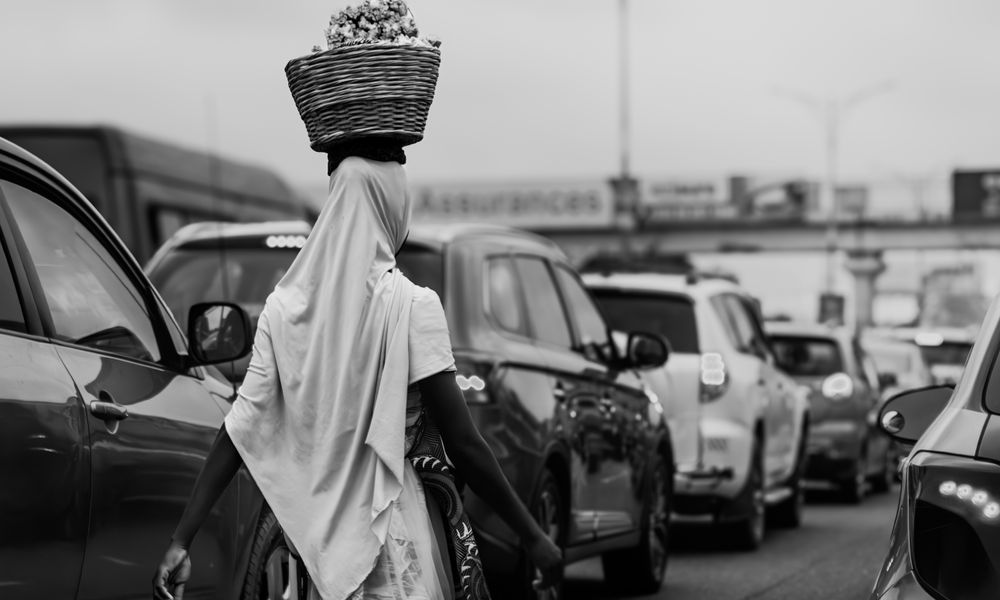
High-Risk Zones: Neighbourhoods to Avoid in Accra and Regional Danger Points
To navigate Ghana safely, you must abandon the generalized notion that a city is either entirely "safe" or "unsafe." Safety in Ghana is highly localized. A single street can transition from a trendy, secure hub of cafes to a high-risk zone within a couple of blocks. Knowing exactly where to go—and more importantly, where not to go—is essential for your daily security mapping.
Accra's No-Go Zones After Dark (Jamestown, Nima, Ashaiman, Lapaz, Circle)
Accra is a sprawling, energetic metropolis, but several neighbourhoods demand extreme caution or complete avoidance, particularly for solo female travellers at night:
- Jamestown and Chorkor: These are historic coastal communities rich in culture, fishing heritage, and colonial architecture. During the day, they are popular tourist spots, but you should never visit them alone. Always hire a reputable local guide. After dark, Jamestown becomes highly dangerous, with frequent reports of street robberies, gang activity, and muggings along the beaches.
- Nima and Maamobi: These are high-density, low-income residential areas. While vibrant and culturally fascinating, they suffer from high rates of localized crime, overcrowding, and youth gang activity. Solo female travellers should avoid wandering through these areas without local accompaniment, and avoid them entirely at night.
- Ashaiman: Located on the eastern outskirts of Accra near Tema, Ashaiman is notorious for violent street robberies, carjackings, and localized lawlessness. There is virtually no reason for a solo tourist to visit Ashaiman, and it should be avoided at all costs.
- Lapaz: A major transit and commercial hub, Lapaz is highly congested. It is a hotspot for coordinated pickpocketing, bag snatching, and armed robberies. Police presence here can be inconsistent, making it a fertile ground for opportunistic criminals who target distracted travellers.
- Kwame Nkrumah Circle (Circle Interchange): This is the beating, chaotic heart of Accra’s transport network. By day, it is a bustling market filled with electronic shops and vendors, but it is also the epicenter of petty crime and pickpocketing in the city. At night, Circle becomes incredibly dark and dangerous. Gangs of pickpockets and phone snatchers operate openly, and solo female travellers should never walk through this area after sunset.
Regional Danger Areas: Why the Northern Borders Require Caution
Beyond the urban confines of Accra, Ghana's regional geography presents distinct security challenges in 2026. The northern regions of Ghana—specifically the Upper East, North East, and Upper West Regions, as well as areas bordering Burkina Faso, Togo, and Côte d'Ivoire—have seen a rise in security alerts. This is primarily due to the spillover of extremist violence and insurgent activity from neighbouring Burkina Faso, where groups like Jama'at Nusrat al-Islam wal-Muslimin (JNIM) operate.
While Ghana's military has heavily reinforced its northern borders to prevent incursions, the risk of kidnapping, civil unrest, and indiscriminate violence remains elevated in these remote border zones. If you plan to visit the north—such as visiting the Mole National Park or the Larabanga Mosque—ensure you stay on main transit routes, avoid travelling close to the actual international border lines, and monitor local news diligently. Furthermore, localized chieftaincy disputes and inter-ethnic tensions can occasionally flare up into violent clashes in towns like Bawku (Upper East Region), resulting in sudden military curfews and travel restrictions.

Transport, Night Safety, and Accommodation Standards for Solo Women
How you move around and where you sleep are the two most critical operational choices you will make during your solo journey. In Ghana, transport and accommodation are areas where paying a little extra for security is not a luxury—it is an absolute necessity.
Navigating Nighttime Transport Safely: Uber, Bolt, Yango, and TroTros
Transport safety in Ghana varies wildly depending on the mode of transport and the time of day. During daylight hours, moving around is relatively straightforward, but night travel requires a strict set of rules:
- App-Based Ride-Hailing (Uber, Bolt, Yango): For solo female travellers, app-based rides are by far the safest option in urban areas like Accra and Kumasi. They provide a digital trail of your journey, driver identification, and GPS tracking. However, safety is not guaranteed. Always verify that the driver's face, name, and license plate match the details in the app before entering the vehicle. Do not get into a car if the driver claims their "app is broken" or if they have a friend riding in the passenger seat. At night, keep your windows rolled up and doors locked, particularly when idling at traffic lights, to prevent "smash-and-grab" thefts.
- Street Taxis (Non-App): If you must use a traditional street taxi, never share it with other passengers (avoid "shared taxis"). Always negotiate and agree upon the fare before putting your foot in the car, as meters are non-existent. At night, avoid street taxis if possible, as there is no centralized registry to track the driver in case of an incident.
- TroTros (Minibuses): TroTros are the primary mode of public transit for everyday Ghanaians. They are incredibly cheap, packed, and loud. While generally safe from violent crime during the day due to the sheer number of passengers, they are highly prone to pickpocketing. Keep your bags clutched tightly to your chest. Avoid riding TroTros at night. They frequently operate with poor maintenance, broken headlights, and reckless drivers, making the risk of road traffic accidents extremely high.
- Intercity Buses: If you are travelling between cities (e.g., Accra to Kumasi or Tamale), use reputable, air-conditioned coach services like STC (State Transport Corporation) or VIP. These depart from secure terminals, use professional drivers, and are far safer than informal minibuses or shared long-distance taxis. Never travel between cities after dark. Highway robberies and banditry occasionally target vehicles on long, unlit intercity roads overnight.
Selecting Secure Accommodation: Hotels, Guesthouses, and Homestays
When booking your accommodation, do not simply look for the cheapest rate. Your lodging must serve as a secure sanctuary where you can truly relax. Here is how to evaluate your accommodation types in Ghana:
Mid-to-High-Range Hotels: If your budget allows, staying in established mid-range or luxury hotels in secure neighbourhoods (such as Cantonments, Airport Residential Area, East Legon, or Labone in Accra) offers the highest level of security. These properties typically feature 24/7 manned security gates, security cameras, electronic room keys, and in-room safes. They also have reliable backup generators ("dumsor" or power outages are frequent in Ghana) and water filtration systems.
Boutique Guesthouses and Hostels: If you prefer a more intimate or budget-friendly setting, look for well-reviewed boutique guesthouses. When booking hostels, read recent reviews specifically written by other solo female travellers. Look for mentions of security: Does the property have a night guard? Are the locks on the doors sturdy? Is the street outside well-lit? Avoid ground-floor rooms with windows that easily open to the street, and always ensure your room door has a physical deadbolt or secondary lock inside.
Airbnbs and Homestays: Homestays can be an excellent way to experience Ghanaian hospitality, but they require vetting. If booking an Airbnb, choose "Superhosts" with dozens of positive reviews. Prioritize apartments located in gated compounds with a security guard ("security man") at the gate. When you arrive, introduce yourself to the security staff—they are invaluable allies who will keep an eye out for you and help you navigate local transport or vendors.

Culture, Street Harassment, and the 2026 Scam Landscape
Understanding the cultural fabric of Ghana is just as important as knowing which streets to avoid. For a solo female traveller, the intersection of gender, culture, and perceived wealth creates unique social dynamics that you must learn to navigate.
Deciphering the Dress Code: What Locals Wear vs. Tourist Etiquette
Ghana is a deeply religious and culturally conservative society, split primarily between Christianity in the south and Islam in the north. How you dress directly influences how you are treated, the level of respect you receive, and the amount of unwanted attention you attract.
Local Ghanaian women take immense pride in their appearance. In professional and social settings, they dress elegantly, often wearing custom-tailored, colorful African print dresses that are form-fitting but modest, usually covering the knees and shoulders. In modern, upscale parts of Accra (like rooftop bars in Osu or East Legon), younger local women do wear modern Western clothing, including crop tops, shorts, and sleeveless dresses. However, this is largely confined to specific nightlife pockets.
As a tourist, your wardrobe should lean toward modesty to avoid unnecessary friction:
- Southern Ghana (Accra, Cape Coast, Kumasi): Wear light, breathable fabrics like linen or loose cotton. While t-shirts and shorts are acceptable in highly touristed areas, short shorts, miniskirts, and deeply plunging tops will attract intense staring and aggressive catcalling. Aim for hemlines that reach the knee, and keep your shoulders covered when visiting markets, religious sites, or rural villages.
- Northern Ghana (Tamale, Mole National Park, Bolgatanga): The north is predominantly Muslim and significantly more conservative. Sleeveless tops, shorts, and tight trousers are highly inappropriate here. You should wear loose, ankle-length skirts, maxi dresses, or loose trousers, and carry a lightweight scarf to cover your head or shoulders if entering local communities or traditional palaces.
- Religious and Formal Spaces: If you visit a church, mosque, or formal community gathering, dressing formally is a sign of respect. Wear a dress or skirt that fully covers your knees, ensure your shoulders are covered, and avoid clothing that is overly tight or transparent.
Managing Catcalling, Unwanted Attention, and Social Harassment
As a solo female traveller in Ghana, you will experience incessant street attention. This is one of the most mentally exhausting aspects of travelling alone in the country. Men will constantly call out to you on the street, using terms like "obruni" (the local term for a white person or foreigner), "baby," "my love," or "beautiful". In the vast majority of cases, this attention is not physically aggressive; it is driven by curiosity, friendliness, or a desire to chat, sell you something, or shoot their shot.
However, the persistence can feel overwhelming. To manage this safely and keep your sanity intact, adopt these strategies:
The "Polite but Firm" Boundary: Acknowledge greetings with a quick, polite smile or a nod, and keep walking. If a man asks where you are going or tries to walk with you, say firmly: "I am meeting my husband/friends nearby, thank you," and continue moving with purpose. Do not feel obligated to engage in long conversations out of politeness.
Avoid Public Escalation: If the attention becomes frustrating, avoid losing your temper or shouting publicly, as this can escalate the situation or draw an angry crowd. Instead, walk directly into a busy shop, hotel lobby, or restaurant and ask the staff for assistance. Ghanaians are generally very protective of visitors and will quickly admonish anyone who is genuinely harassing you.
The "Husband" Shield: Wearing a simple wedding band and casually referring to your "husband" who is waiting for you at the hotel or arriving tomorrow is a highly effective tool for shutting down unwanted romantic advances. In a conservative society like Ghana, the concept of a married woman is highly respected, and most men will immediately back off once they believe you are married.
Financial Fraud and Romance Scams: Protecting Your Wallet
Ghana has a well-documented history of sophisticated internet and financial fraud, often referred to locally as "Sakawa" or "419" scams. While many of these scams target victims remotely overseas—such as complex romance scams or business email compromises—foreigners on the ground are also primary targets. According to reports from the U.S. Embassy in Ghana, credit card fraud, ATM skimming, and financial extortion are common issues affecting travellers.
To protect your financial security, adhere to these strict protocols:
- ATM Safety: Never use standalone, outdoor ATMs on the street, especially at night, as they are highly vulnerable to physical skimming devices and card trapping. Only withdraw cash from ATMs located inside secure, well-lit bank branches. Always cover the keypad with your hand when entering your PIN.
- Card vs. Cash: Limit the use of your credit card to major, reputable establishments (like international hotel chains or large supermarkets). For daily transactions, cash is king. Carry local currency (Ghana Cedis) and keep it stored in different pockets so you never pull out a large stack of bills in public. Mobile money ("MoMo") is widely used in Ghana and is a highly secure, convenient way to pay once you acquire a local SIM card.
- Overpriced Services and Informal Guides: At popular historical sites like Cape Coast Castle or Kakum National Park, you will be approached by informal guides offering their services. Many of these guides are unlicensed and may attempt to overcharge you or demand extra "fees" at the end of the tour. Always book and pay for guides through the official ticket counters at the entrance of these attractions.

Health, Vaccinations, and Emergency Resources
Your physical safety is only one half of the security equation; your health is the other. Navigating Ghana's tropical climate and medical landscape requires preparation long before your flight lands at Kotoka International Airport.
Medical Preparedness: CDC Guidelines and Yellow Fever Mandates
Before travelling to Ghana, you must consult a travel medicine clinic at least 4 to 6 weeks in advance. The U.S. Centers for Disease Control and Prevention (CDC) outlines several mandatory and highly recommended health precautions for visitors:
Yellow Fever: A valid, physical Yellow Fever Vaccination Certificate (the "Yellow Card") is strictly mandatory for entry into Ghana for all travellers aged 9 months and older. You will be required to present this physical document to health officials at immigration upon arrival. Digital copies or excuses are not accepted; if you do not have it, you may be denied entry or subjected to an on-site vaccination under questionable hygienic conditions.
Malaria Prevention: Malaria is endemic throughout all regions of Ghana, and the risk of contracting it is high. It is a life-threatening disease transmitted by mosquitoes. You must take daily or weekly malaria prophylaxis (such as Atovaquone/Proguanil, Doxycycline, or Mefloquine) as prescribed by your doctor. Additionally, pack a high-quality insect repellent containing at least 20-30% DEET, wear long sleeves and trousers after sunset, and always sleep under an insecticide-treated mosquito net.
Food and Water Safety: Tap water in Ghana is not safe to drink. Only consume bottled, sealed water, or use water purification tablets/filters. Avoid ice in drinks unless you are in a high-end establishment that uses purified water. Eat only hot, freshly cooked food, and avoid raw vegetables, unpeeled fruits, or undercooked meats, which are common sources of typhoid, cholera, and bacterial diarrhea.
Real-Time Security Tracking with TripGuard360
In a rapidly changing travel environment, static travel guides are simply not enough. A neighbourhood that was perfectly safe yesterday could experience a sudden protest, a localized power outage, or a spike in crime today. This is where TripGuard360 becomes an indispensable safety asset for solo female travellers.
TripGuard360 is a cutting-edge safety platform designed to send real-time, location-based safety alerts directly to your phone. Whether it is a sudden political demonstration in Accra's Independence Square, a weather-related flash flood warning in Kumasi, or a localized civil curfew in the northern regions, TripGuard360 monitors global and local intelligence channels 24/7. As a solo female traveller, having this automated, real-time safety partner in your pocket ensures that you are never caught off guard. If conditions shift, TripGuard360 immediately sends you an alert with clear, actionable advice on how to stay safe, avoid the area, or seek shelter—giving you total peace of mind as you explore Ghana.
Emergency Contacts and Local Support Networks
If you encounter an emergency, you must know exactly who to call. Do not wait for a crisis to look up emergency numbers. Save these contacts directly into your phone and keep a physical copy written down in your day bag:
National Emergency Numbers in Ghana:
- Police Emergency: 191 (or 18555 for rapid response)
- Fire Service: 192
- Ambulance Service: 193
- General Emergency Hotline: 112
Consular Services: If your passport is lost or stolen, or if you are detained, contact your home country's embassy or high commission in Accra immediately. The U.S. Embassy is located in the Cantonments neighbourhood, while the UK, Canadian, and Australian high commissions are also centrally located in Accra's secure diplomatic enclaves. Prior to your trip, enroll in your government's traveller registration program (such as the U.S. State Department's Smart Traveler Enrollment Program, or STEP) to ensure your embassy can locate and assist you in the event of a natural disaster or national crisis.
So, Is Ghana Safe for Solo Female Travellers 2026? The Final Verdict
When it comes down to the ultimate question—is ghana safe for solo female travellers 2026—the answer is a qualified yes, but only if you are an experienced, vigilant, and highly prepared traveller.
Ghana is not a beginner-friendly destination like Iceland or Japan. It is loud, chaotic, and can be emotionally demanding due to persistent street harassment and systemic infrastructural challenges. However, it is also a country of profound beauty, rich history, and some of the warmest, most generous people you will ever meet. If you can establish firm social boundaries, dress appropriately for local customs, avoid high-risk neighbourhoods at night, use trusted app-based transport, and maintain strict health protocols, you can minimize your risks and have an incredibly rewarding solo adventure.
By blending your natural street smarts with the real-time, protective intelligence of a modern safety companion, you can navigate Ghana with the ultimate confidence. Don't leave your personal security to chance in 2026.
Protect your solo journey and travel with absolute peace of mind. Try TripGuard360 free today and experience the power of real-time safety alerts wherever your adventures take you.