Measles Vaccination for Travel 2026: Entry Rules
Global Travel Health & Vaccinations: Preparing for Your 2026 Journey
In 2026, the landscape of international travel is more vibrant than ever, but it is also governed by an increasingly complex web of health security regulations. Following a global resurgence of vaccine-preventable illnesses, public health agencies worldwide have reinforced border controls and entry mandates. Preparing for an international trip is no longer just about securing visas and booking flights; ensuring your immunization status is fully compliant with destination-specific laws is now a critical step in the pre-departure process. To stay ahead of these fluid requirements, travelers frequently consult our travel safety blog, which provides the latest updates on global border conditions and health advisories.
Failing to prepare for health requirements can lead to severe consequences at the border, ranging from costly mandatory quarantines to being immediately turned back. Whether you are embarking on an adventurous trek through South America, attending a massive cultural event in the Middle East, or traveling for business in Europe, understanding the precise vaccine requirements of your destination is paramount. The global health environment requires a proactive approach, which is why a pre-travel health consultation with a travel medicine specialist is recommended at least four to six weeks before your departure date.
The Changing Landscape of International Health Directives
The days when only a few select countries required proof of vaccination are gone. In 2026, localized outbreaks can trigger immediate and sweeping changes to border entry rules. Modern global transit hubs act as high-speed vectors for transmission, prompting sovereign states to enact strict, temporary, or permanent immunization requirements. Public health authorities, such as the World Health Organization (WHO) and the Centers for Disease Control and Prevention (CDC), routinely adjust their guidance in response to epidemiological data. This dynamic environment means that travelers must treat health requirements as an active, shifting component of their itinerary rather than a static, one-time checklist. Exploring our travel guides can help you visualize regional health risks and prepare for your specific journey.

Understanding Countries Requiring Measles Vaccination for Entry 2026
The global surge in measles transmission has emerged as one of the most prominent public health challenges of 2026. Measles is an exceptionally contagious viral infection, caused by a paramyxovirus that spreads via airborne droplets when an infected person coughs, talks, or sneezes. The virus can remain suspended and infectious in the air or on surfaces for up to two hours, meaning you can contract it simply by entering a room that an infected person left hours prior. With an basic reproduction number (R0) of 12 to 18, it is far more transmissible than influenza or SARS-CoV-2. This high transmissibility has led many nations to rethink their entry policies to protect their domestic populations.
Current Global Measles Outbreaks and Alerts
In 2025 and continuing into 2026, the world has witnessed a dramatic spike in measles cases. Public health agencies have reported major, disruptive outbreaks across multiple continents. In the United States, the CDC has reported over 1,900 confirmed measles cases in early 2026, primarily fueled by unvaccinated international travelers returning from overseas holidays. Similarly, massive outbreaks have swept across the United Kingdom, broader Europe, Central Asia (including Kyrgyzstan and Kazakhstan), and parts of Africa. A drop in childhood immunization rates during the pandemic years has created significant "immunity gaps," leaving entire communities vulnerable to importation. In response, several countries have established strict entry rules or advisories targeting the MMR (Measles, Mumps, and Rubella) vaccine.
A Guide to Countries Requiring Measles Vaccination for Entry 2026
When analyzing countries requiring measles vaccination for entry 2026, it is crucial to understand that requirements are implemented in two primary ways: formal, mandatory border checks requiring an official vaccination certificate, and strong administrative advisories where non-compliance can result in isolation or entry denial during localized outbreaks.
For standard entry, the primary defense is the MMR vaccine. The vaccine is administered in a 2-dose series.
- First Dose: Typically given to infants at 12 through 15 months of age.
- Second Dose: Administered at 4 through 6 years of age.
- Travelers' Timing: Adults without documented evidence of immunity (such as laboratory confirmation of antibodies or two recorded doses of the MMR vaccine) should receive two doses, separated by at least 28 days, with the final dose administered at least 2 weeks before departure to allow full immunity to develop.
Samoa and Pacific Islands MMR Requirements
The Pacific Island nations, which historically suffered devastating impacts from imported measles epidemics, maintain some of the strictest health-entry advisories in the world. Samoa and American Samoa have experienced repeated public health emergencies due to measles importation. Consequently, for 2026, the Samoan Ministry of Health strongly advises all incoming international travelers—including infants aged 12 months and older—to have received at least one documented dose of a measles-containing vaccine at least 14 days prior to arrival. During active outbreak alerts, border officials in these Pacific jurisdictions, as well as the Solomon Islands and the Marshall Islands, retain the legal authority to demand proof of measles vaccination or a medical certificate of immunity from travelers arriving from designated high-risk zones. Failure to comply can lead to immediate quarantine at the traveler's expense or denial of entry.
How Honduras Sparked a Shift in Central American Border Policies
A prime example of the fluid and volatile nature of 2026 travel health mandates occurred in Central America. In mid-2025, the National Office of Migration in Honduras issued Executive Decree No. 28-1-2025, which initially declared that all foreign travelers arriving from 24 countries experiencing measles outbreaks—including the United States and Canada—must present a valid vaccination certificate or a negative measles antibody test taken 72 to 80 hours before arrival. The announcement created widespread confusion, highlighting the sudden hurdles modern travelers face. Although Honduras subsequently modified the rule to focus primarily on Honduran citizen minors departing to affected countries, the incident established a precedent. It showed that sovereign states can and will deploy rapid, emergency border measures targeting measles immunity as outbreak conditions fluctuate.
Mandatory Versus Recommended Vaccines: What You Need for Global Entry
It is vital for travelers to distinguish between mandatory vaccinations (required by international law or national sovereignty to cross a border) and recommended vaccinations (advised by clinical bodies to protect the traveler from endemic health threats). Both are crucial, but a missing mandatory vaccine will legally prevent you from entering your destination.
Yellow Fever (YF) Vaccination Protocols
The yellow fever vaccine remains the most strictly enforced mandatory entry vaccination under the CDC Travelers' Health Guidelines and WHO International Health Regulations (IHR). Yellow fever is a viral hemorrhagic disease transmitted by infected Aedes mosquitoes in tropical regions of Africa and Central and South America.
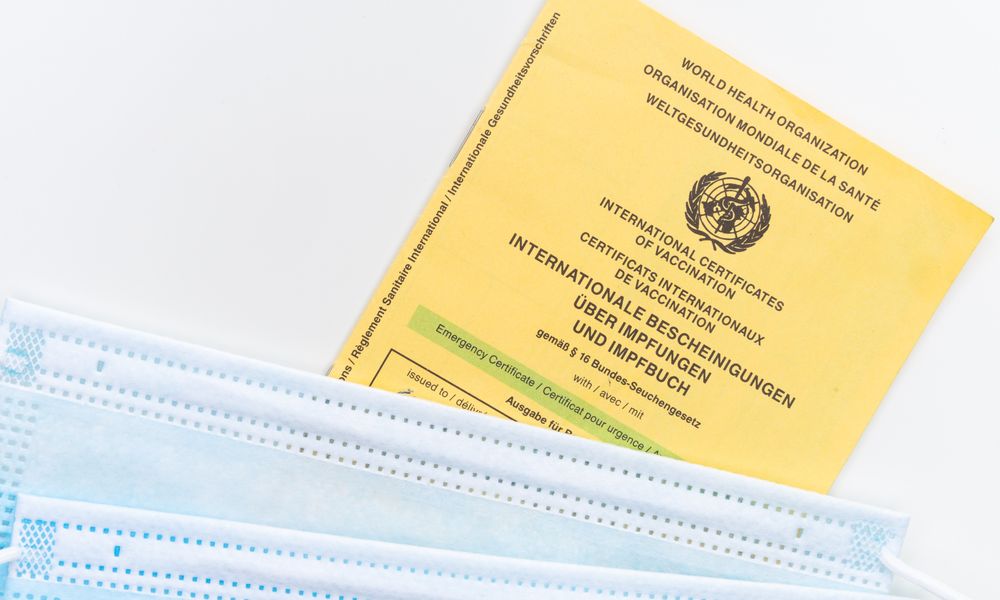
Mandatory Entry Rules: Many countries require a valid International Certificate of Vaccination or Prophylaxis (ICVP), commonly known as the "Yellow Card," showing proof of yellow fever vaccination. These requirements apply under two scenarios:
- Universal Requirement: Countries where the disease is actively endemic (such as Ghana, Angola, Nigeria, and French Guiana) require proof of vaccination from all arriving travelers over 9 months of age, regardless of their origin country.
- Transit Requirement: Many countries without active yellow fever transmission (such as Singapore, Australia, and South Africa) require proof of vaccination only if you are arriving from, or have transited for more than 12 hours through an airport of, a country with a known risk of yellow fever transmission.
Meningococcal Meningitis for Saudi Arabia (Hajj & Umrah 2026)
For travelers planning to perform the Hajj or Umrah pilgrimages in Saudi Arabia in 2026, or those entering the Hajj zones for seasonal work, proof of vaccination against meningococcal meningitis is strictly mandatory. Meningococcal meningitis is a severe bacterial infection of the lining of the brain and spinal cord, spreading rapidly in dense, crowded conditions.
The Saudi Arabian Ministry of Health mandates the following vaccination protocols for all arrivals:
- Approved Vaccines: Travelers must receive either the Quadrivalent (protecting against serogroups A, C, Y, and W) conjugate vaccine, the newer Pentavalent (ACYWX) conjugate vaccine, or a quadrivalent polysaccharide vaccine.
- Timing: The vaccine must be administered at least 10 days before arriving in Saudi Arabia.
- Certificate Validity: The conjugate vaccine certificate is valid for 5 years, while the polysaccharide vaccine is valid for only 3 years. The exact vaccine name and administration date must be clearly written on the certificate.
Polio Vaccine Entry and Exit Rules
Poliomyelitis (polio) remains a major target of global eradication campaigns. While the wild poliovirus is endemic only in Afghanistan and Pakistan, vaccine-derived poliovirus strains continue to circulate in wastewater across various countries, including parts of Africa and occasionally Europe.
Entry and Exit Mandates: Under the WHO's temporary emergency recommendations, countries with active poliovirus transmission are subject to travel restrictions. If you reside in or are visiting a polio-affected country (such as Pakistan, Afghanistan, the Democratic Republic of the Congo, or Somalia) for more than 4 weeks, you must receive a dose of either the **Oral Polio Vaccine (OPV)** or **Inactivated Polio Vaccine (IPV)** between 4 weeks and 12 months prior to departing that country. This dose must be officially documented on your "Yellow Card" (ICVP). Border officials have the legal right to prevent travelers without this documented dose from departing the country.
Other Key Recommended Vaccines for Global Travel
While the following vaccines are rarely mandatory for tourist entry, they are strongly recommended by international health portals depending on your specific destination, length of stay, and activities.
| Disease | Vaccine Type / Protocol | Timing & Dosing Schedule | High-Risk Regions |
|---|---|---|---|
| Hepatitis A | Inactivated virus vaccine (e.g., Havrix, Vaqta) | 2-dose series. First dose given at least 2 weeks before travel. Second dose given 6 to 18 months later for lifetime protection. | Worldwide; highly recommended for areas with poor sanitation and limited access to clean drinking water (parts of Asia, Africa, Central/South America). |
| Hepatitis B | Recombinant vaccine (e.g., Engerix-B, Recombivax HB) | Standard: 3 doses at 0, 1, and 6 months. Accelerated: 3 doses over 30 days, with a booster at 12 months. | Endemic in parts of Sub-Saharan Africa, East Asia, and the Pacific Islands. Recommended for those exposed to blood, medical environments, or sexual contact. |
| Typhoid Fever | Injectable (ViCPS) or Oral (Ty21a live vaccine) | Injectable: 1 dose at least 2 weeks prior (valid for 2 years). Oral: 4 capsules taken every other day, finished 1 week prior (valid for 5 years). | South Asia (especially India, Pakistan, Bangladesh), parts of Africa and East Asia. Recommended for adventurous eaters and rural travelers. |
| Rabies | Inactivated virus vaccine (RabAvert, Imovax) | Pre-exposure prophylaxis: 2 doses given on days 0 and 7. (An additional dose may be advised depending on risk). | Worldwide, particularly in countries with high stray dog populations (India, Southeast Asia, parts of Africa). Recommended for cavers, veterinarians, and remote travelers. |
| Cholera | Oral live-attenuated vaccine (e.g., Vaxchora) | Single oral dose taken at least 10 days before travel (approved for travelers aged 2 through 64 years). | Regions experiencing active cholera outbreaks, often triggered by humanitarian crises or natural disasters (parts of East/West Africa, Haiti, Yemen). |
Malaria Prophylaxis: Unlike viral and bacterial infections, there is no universally deployed commercial vaccine for short-term adult travelers against malaria, though the RTS,S and R21 vaccines are utilized for pediatric populations in endemic regions. For travelers, protection relies on prescription antimalarial medications. Popular options include Atovaquone-proguanil (taken daily, starting 1 to 2 days before travel, during the trip, and for 7 days after), Doxycycline (taken daily, starting 1 to 2 days before, during the trip, and for 28 days after), or Mefloquine (taken weekly, starting 2 to 3 weeks before, during, and for 4 weeks after). The choice of medication depends heavily on regional drug-resistance patterns.
Practical Travel Health Strategies and On-the-Ground Safety
Even if you are fully vaccinated, clinical protection is only one layer of a safe journey. On-the-ground environmental hazards, water contamination, and foodborne pathogens require vigilant personal hygiene and risk-mitigation strategies.
Food and Water Safety Standards
Contaminated food and water are the leading causes of travelers' diarrhea, which affects millions of international visitors annually. Pathogens like E. coli, Salmonella, Giardia, and norovirus are easily transmitted through improper food handling and untreated water sources. To safeguard your digestive health, strictly adhere to the following guidelines:
- Water Protocol: Do not drink tap water in developing countries or regions with compromised sanitation infrastructure. Avoid ice cubes, as they are often made from tap water. Stick to sealed, commercially bottled water, or use reliable water purification methods, such as boiling water vigorously for at least one minute, using a certified portable water filter (0.1 micron or smaller), or treating water with chlorine dioxide tablets.
- Food Selection: Follow the golden travel rule: "Boil it, cook it, peel it, or forget it." Consume food that is freshly prepared and served piping hot. Avoid raw salads, pre-peeled fruits, unpasteurized dairy products, and undercooked seafood or meats. Be particularly cautious with street vendors unless you can verify high turnover and clean preparation practices.
Quality of Medical Facilities & Insurance Requirements
The standard of medical care varies dramatically around the world. While major capital cities in Europe, East Asia, and the Americas boast world-class hospitals with English-speaking staff, rural and remote regions of developing countries may have severely limited medical infrastructure. In some areas, emergency rooms lack basic supplies, sterile equipment, or specialized pharmaceuticals.
Travel Health Insurance: Because of these regional disparities, having comprehensive travel medical insurance is not just a recommendation; in 2026, it is a mandatory entry requirement for several countries (such as Ecuador, Costa Rica, and Schengen Area states for certain visa holders). Your standard domestic health insurance rarely covers international medical expenses or emergency medical evacuation. CRITICAL WARNING: Ensure your travel policy specifically covers emergency medical evacuation up to at least $100,000 to $250,000, which can cover the immense cost of airlift services from remote regions to a high-quality medical hub. Your policy should also include coverage for repatriation of remains and 24/7 emergency medical assistance hotlines.
What to Pack in a Comprehensive Travel Medical Kit
Carrying a well-stocked travel medical kit allows you to manage minor ailments on the spot and ensures you have sterile, reliable materials if you require treatment in a clinic with limited resources.
Your travel medical kit should include:
- Personal Prescription Medications: Pack enough medication for your entire trip plus an extra one-week supply in case of travel delays. Always keep these in their original, clearly labeled pharmacy bottles, and carry a copy of your doctor's written prescription.
- Over-the-Counter Medications:
- Broad-spectrum antibiotics (prescribed by your travel doctor for self-treatment of severe travelers' diarrhea).
- Antidiarrheal medication (such as loperamide or bismuth subsalicylate).
- Oral rehydration salts (critical for combating dehydration from severe vomiting or diarrhea).
- Antihistamines for allergic reactions.
- Pain and fever reducers (ibuprofen, acetaminophen).
- First Aid Supplies: Adhesive bandages of various sizes, sterile gauze pads, antiseptic wipes, medical tape, tweezers, small scissors, and disposable nitrile gloves.
- Vector Protection: Insect repellent containing 20% to 50% DEET, Picaridin, or Oil of Lemon Eucalyptus to protect against mosquito-borne pathogens like dengue, Zika, and chikungunya.

How TripGuard360 Keeps You Safe with Real-Time Health Alerts
As the landscape of 2026 demonstrates, travel health regulations and entry mandates are highly fluid. A country that is completely open to travel today could introduce mandatory measles or yellow fever checks next week in response to an unexpected outbreak. Navigating this shifting regulatory terrain on your own can be overwhelming, but TripGuard360 is designed to eliminate the guesswork and protect your travel plans from sudden disruption.
TripGuard360 utilizes a sophisticated, proprietary monitoring engine that scans official global health advisories and border policy changes in real-time. Our system aggregates data directly from authoritative bodies, including the U.S. Department of State, the UK Foreign, Commonwealth & Development Office (FCDO), the WHO, the CDC, and national ministries of health worldwide. The moment a destination country updates its entry health protocols—whether it is a sudden change in countries requiring measles vaccination for entry 2026, a new yellow fever certificate requirement, or an emergency quarantine declaration—TripGuard360 processes the change immediately.
Rather than requiring you to manually check government websites, TripGuard360 delivers personalized, instant alerts directly to you. Through seamless integration with Telegram and real-time email notifications, you receive immediate, actionable updates the moment entry rules shift for any destination on your itinerary. Whether you are at home planning your trip or already in transit at an international airport, TripGuard360 acts as your real-time health shield, ensuring you always arrive at the border fully prepared, compliant, and protected.