Myanmar Civil War 2026: Urgent Travel Advisory
The Reality of Myanmar in 2026: An Urgent Travel Safety Update
Myanmar’s security landscape has fractured into a state of severe, multi-faceted instability. The nation continues to be engulfed in a high-intensity civil war that has escalated dramatically since the military junta seized power in February 2021. As we navigate 2026, the situation has degraded from localized insurgencies into a nationwide armed conflict affecting every state and region. Clashes between the military regime (the Tatmadaw) and a loose coalition of ethnic armed organizations (EAOs) and local People’s Defence Forces (PDF) have decimated the country’s infrastructure, economy, and healthcare system. For international travelers, the implications are profound: the country has become one of the most hazardous destinations on earth, prompting global authorities to issue their highest-level warnings.
The conflict has resulted in widespread tragedy and disruption. According to data tracked by the United Nations, the ongoing war has displaced over three million civilians and resulted in tens of thousands of casualties. What was once a burgeoning tourism destination in Southeast Asia is now a highly volatile combat zone. Crucially, the fighting is no longer confined to remote border areas or jungle strongholds. Urban warfare, sabotage campaigns, and frequent bombings have directly penetrated major commercial hubs, including Yangon (Rangoon), Mandalay, and the administrative capital of Nay Pyi Taw. Anyone considering travel to this region must understand that the threat environment is dynamic, unpredictable, and presents extreme risks to physical safety and personal liberty.
Civil War and Territorial Fragmentation in 2026
The territorial control of Myanmar is highly fragmented, with the military junta on the defensive across multiple fronts. Independent monitors and international think tanks indicate that the military regime now maintains stable control over less than a quarter of the country’s townships, primarily concentrated in the central Bamar heartland and heavily fortified urban enclaves. Conversely, resistance forces have captured numerous district-level towns and establish parallel administrative systems across Sagaing, Magway, Chin, Karenni, and Shan states. This territorial tug-of-war has created a fluid and highly volatile security environment where frontlines shift overnight, and civilian areas are routinely caught in the crossfire.
To compensate for battlefield losses, the military regime has increasingly relied on heavy artillery, airstrikes, and advanced aerial platforms to strike targets, often making no distinction between active combatants and civilian populations. Throughout late 2025 and into 2026, the junta has expanded its use of drones, paramotors, and gyrocopters to launch offensive operations, including devastating attacks on villages, schools, and hospitals in opposition-controlled regions. Travelers must recognize that any location outside the highly protected diplomatic zones of Yangon and Nay Pyi Taw carries an imminent risk of military bombardment, indiscriminate shelling, and active infantry skirmishes.
High-Intensity Urban Violence and IED Detonations
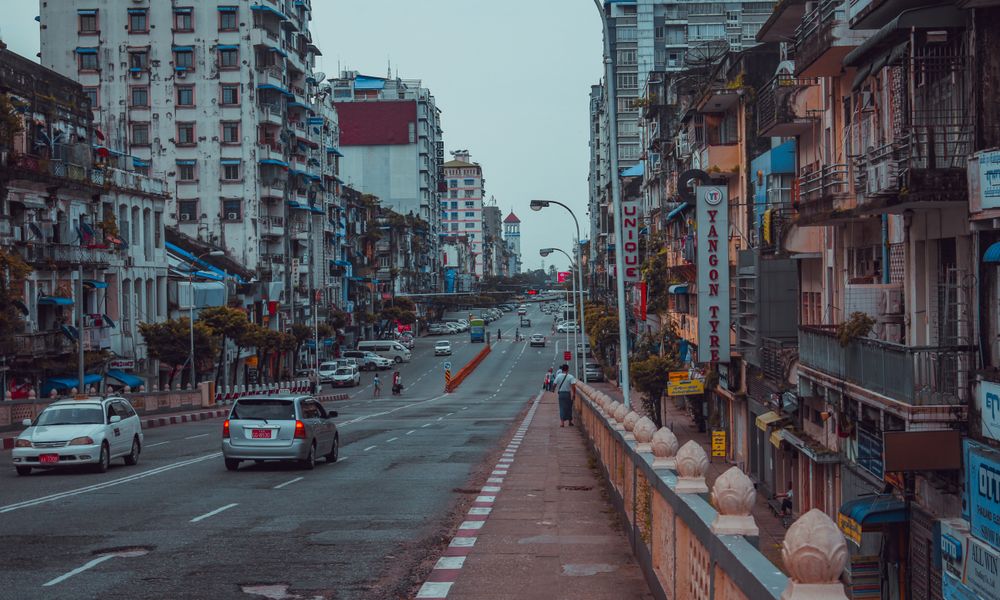
For those who assume that staying within Myanmar's major metropolitan areas offers safety, urban security has degraded to a critical level. Resistance groups and urban guerrilla units frequently target military-affiliated personnel, regime offices, checkpoints, and state-run administrative infrastructure. Improvised explosive devices (IEDs) have become a recurring feature of daily life in Yangon, Mandalay, and other key cities. The U.S. Department of State Burma Travel Advisory highlights that the U.S. Embassy in Rangoon has recorded an average of six explosions per month in Yangon alone, with blasts frequently occurring near government buildings, shopping centers, transport hubs, and security checkpoints.
These IED attacks and targeted assassinations are highly unpredictable and carry a significant risk of collateral damage. Shrapnel from roadside bombs and grenade attacks on military patrol vehicles routinely injure or kill bystanders. In addition, the military's response to these urban attacks is immediate and severe, often involving rapid area cordons, random inspections, and the indiscriminate arrest of anyone in the vicinity. If you are near the scene of an explosion, you face a double threat: the immediate blast hazard, followed by the high probability of being detained and interrogated by paranoid security forces who view any foreigner with intense suspicion.
Crucial Myanmar Travel Advisory 2026 Details: What Travelers Need to Know
The current baseline for international travelers is simple: do not travel to Myanmar under any circumstances. If you are already in the country, you should make immediate plans to depart using commercial means while they remain available. The risks associated with remaining in the country are not limited to the physical dangers of civil war; they also encompass a legal and administrative minefield characterized by the complete breakdown of the rule of law. The military regime operates with absolute impunity, and the protections typically afforded to foreign nationals by international law are effectively non-existent in the current political climate.
Understanding the micro-level security measures enforced by the military regime is essential for anyone currently operating within the country. To explore how urban violence affects global travel policies and insurance coverages across other volatile zones, visit our travel safety blog, where we break down conflict-zone logistics. In Myanmar, navigating the streets has become a highly coordinated effort to avoid arbitrary arrest, conscription patrols, and localized crackdowns.
Risk of Arbitrary Detentions and Foreigner Targeting
One of the most critical threats facing foreign nationals in Myanmar is the high risk of arbitrary detention and arrest. The military regime utilizes broad, loosely defined security laws to detain individuals who express any form of dissent, carry unauthorized communication equipment, or are suspected of sympathizing with opposition groups. Foreigners have been arrested and sentenced to lengthy prison terms on fabricated charges of violating import-export laws, immigration regulations, or electronic communications acts. The junta’s legal system operates in complete secrecy, and detained individuals are routinely denied access to consular representatives, legal counsel, and proper medical care.
The regime's paranoia has led to heightened scrutiny of foreign visitors. Possessing drone equipment, taking photographs of bridges, government buildings, or security personnel, or even carrying certain mapping applications on your smartphone can be treated as espionage. Journalists, aid workers, and NGO staff are particularly targeted, but ordinary tourists are also highly vulnerable. The regime has demonstrated a willingness to use foreign detainees as political leverage, making arbitrary arrests a tool of statecraft. If you are detained, your home government’s embassy will face severe, often insurmountable obstacles in securing your release or even confirming your physical well-being.
Strict Enforcement of Guest List Inspections and Curfews
In response to growing urban resistance, the military authorities have dramatically escalated domestic surveillance. In early 2026, security conditions in Yangon and Mandalay deteriorated further following a major command shift within the regional military leadership. This has resulted in a massive surge in intrusive, late-night household "guest list" inspections. Under local law, residents—including those hosting foreigners—are required to report overnight guests to local administrative offices. Failure to do so, or being found in a residence during an unannounced midnight raid without proper registration, results in immediate arrest and detention.
Furthermore, strict night curfews remain in effect across most major cities and townships, typically running from late evening to early morning. These curfews are enforced by heavily armed military patrols who are authorized to use lethal force against anyone violating the order. Being on the streets during curfew hours, whether on foot or in a vehicle, is extremely dangerous. Security forces frequently set up temporary, unlit checkpoints, and drivers who fail to stop or slow down quickly enough are routinely fired upon without warning. These curfews can be altered or extended at short notice, leaving travelers stranded and highly vulnerable.
Forced Conscription Laws and Border Vulnerabilities
The military regime’s desperation for manpower has led to the aggressive enforcement of the People’s Military Service Law (the national conscription law). This law mandates military service for eligible males up to age 45 and females up to age 35. While the law primarily targets Burmese citizens, it has created immense complications for dual nationals and foreign citizens of Burmese descent. The military authorities do not recognize dual citizenship, and several individuals holding foreign passports have been barred from leaving the country, forced into military service, or detained at immigration points.
At the same time, Myanmar's land borders have become epicenters of intense fighting. Land border crossings with Thailand, India, China, and Bangladesh are highly unstable, frequently changing hands between the military and resistance forces. The UK Foreign, Commonwealth & Development Office (FCDO) Myanmar Travel Advice strongly warns against all travel to border regions due to active military operations, artillery bombardments, and the presence of millions of unexploded landmines. Attempting to cross these borders overland is an extraordinarily high-risk endeavor, with a near-certainty of encountering active combat, banditry, human trafficking networks, or arbitrary arrest by various armed factions.
Impact on Flights, Airports, and Local Transport Infrastructure
The transport network within Myanmar is heavily compromised, making both domestic and international travel highly unreliable. The infrastructure has been systematically targeted by sabotage campaigns, and the military regime frequently shuts down highways, bridges, and regional airports to prevent the movement of resistance forces or to secure areas for military operations. Consequently, long-distance travel within the country is practically impossible to plan with any degree of certainty, and travelers risk becoming isolated in highly hostile territory with no means of escape.
Understanding these logistical bottlenecks is crucial for anyone attempting to coordinate a departure. For deep-dive analyses of transit security, checkpoint protocols, and evacuation strategies across different high-risk zones globally, check out our travel guides. These resources provide the tactical knowledge required to navigate collapsing transport infrastructures.
Restricted Airspace and Commercial Flights Suspension
Myanmar's aviation sector is operating under severe constraints. International flights to and from Yangon International Airport (RGN) are highly limited, with many major commercial carriers having suspended their routes entirely due to security concerns, skyrocketing insurance premiums, and fuel supply instability. The flights that do operate are subject to sudden cancellations, significant delays, and schedule alterations at short notice. The airspace over several regions of the country is completely closed to civil aviation, forcing commercial flights to take highly circuitous routes to avoid anti-aircraft fire and military combat sorties.
Domestic air travel is even more unstable. Regional airports in states like Kachin, Rakhine, Karenni, and Shan are frequently closed for days or weeks at a time due to nearby fighting or because the military has requisitioned all available runways for combat operations. Security screenings at domestic terminals are incredibly intense and invasive; passengers are routinely subjected to prolonged interrogations, physical searches, and deep examinations of their electronic devices. If security personnel discover any digital content that they deem suspicious, passengers are immediately transferred to military detention centers.
Highway Blockades and Intercity Travel Risks
Attempting to travel between cities by road is a perilous undertaking that should be avoided at all costs. The main highways connecting Yangon, Mandalay, and Nay Pyi Taw are littered with heavily armed military checkpoints, as well as roadblocks established by various rebel groups and local militias. At military checkpoints, travelers are routinely subjected to harassment, extortion, and arbitrary document checks. Foreigners are viewed with extreme suspicion, and carrying unauthorized currency, excessive medical supplies, or communication devices can lead to immediate arrest on suspicion of aiding the resistance.
Moreover, the roads themselves are major combat zones. Ambushes on military convoys, civilian buses, and commercial trucks are a frequent occurrence on all major transit corridors. Rebel forces often deploy roadside IEDs to target regime movements, and the military responds by firing indiscriminately at any approaching civilian vehicles. Additionally, critical infrastructure such as bridges and railway lines are primary targets for sabotage. The rail network is highly unsafe, with passenger trains frequently derailed by explosive devices planted on the tracks. Traveling by land in Myanmar is quite literally a gamble with your life.

Official Recommendations and Safety Guidelines for the Myanmar Travel Advisory 2026
Consensus among the world's leading travel authorities is absolute: do not travel to Myanmar. Governments across the globe have classified Myanmar as a "Level 4: Do Not Travel" or "Avoid All Travel" destination, which is the most severe warning level possible. These advisories are not issued lightly; they reflect an objective assessment that the safety of foreign nationals cannot be guaranteed, and that consular officials have a severely limited ability to provide assistance in the event of an emergency.
US, UK, and Australian Government Stances
The world’s primary security agencies have updated their stances to reflect the extreme danger present throughout 2026. The official advice is clear, uncompromising, and uniform across all Western nations:
- United States: The Department of State maintains a strict Level 4: Do Not Travel advisory. They warn that the U.S. government has extremely limited ability to provide emergency services to U.S. citizens in Myanmar, as consular staff are restricted from traveling outside Yangon and face severe administrative roadblocks from the military regime.
- United Kingdom: The FCDO advises against all travel to Myanmar, noting that the security situation is increasingly volatile and liable to deteriorate at short notice. They emphasize that the military regime can introduce sweeping travel restrictions, curfews, and communication blackouts at any time without warning.
- Australia: The Australian Department of Foreign Affairs and Trade, through its Australian Government Smartraveller Guide for Myanmar, advises Australians to do not travel. They strongly warn those already in the country to depart immediately while commercial flights are still operating and safe routes are available.
Essential Pre-Travel Preparations for Those Remaining
If you are a humanitarian worker, diplomat, or find yourself in a situation where departure is absolutely impossible, you must take extraordinary measures to protect yourself. First and foremost, you must register your presence with your home country’s embassy or consulate. For Americans, this means enrolling in the Smart Traveler Enrollment Program (STEP); for Australians and British nationals, direct registration with the local embassy database is critical. This ensures that consular teams know your location and can attempt to contact you in the event of a coordinated evacuation effort.
Additionally, you must prepare to shelter-in-place for extended periods. This requires maintaining a minimum of two to three weeks' supply of non-perishable food, clean drinking water, essential prescription medications, and emergency power sources. The domestic banking system in Myanmar is on the verge of collapse; ATMs are frequently empty, international credit cards are rarely accepted, and the local currency (the Kyat) is highly volatile. You must maintain an emergency reserve of physical cash—specifically pristine, uncreased, and unmarked U.S. dollar bills—which are often the only currency accepted for critical transactions, medical emergencies, or securing emergency transport.
Alternative Destinations in Southeast Asia for 2026
Given the critical security situation in Myanmar, travelers seeking the rich cultural heritage, ancient temples, and stunning natural landscapes of Southeast Asia must redirect their itineraries to safer, highly stable alternatives. Fortunately, the region offers several world-class destinations that provide incredible travel experiences without exposing visitors to the horrors of active civil war, urban bombings, and arbitrary detentions.
These alternative destinations maintain robust tourism infrastructures, modern medical facilities, and stable political climates, ensuring that your travel remains memorable for the right reasons. When redirecting your travel plans, consider the following highly recommended alternatives:
Safer Culturally Rich Alternatives
For those who had planned to explore the ancient Buddhist temples of Bagan or the serene waters of Inle Lake, Southeast Asia offers exceptional, secure alternatives that capture the same spiritual and historical essence:
- Northern Thailand (Chiang Mai and Chiang Rai): Known as the cultural heart of Thailand, this region features spectacular ancient temples, vibrant night markets, and lush mountainous landscapes. Thailand remains highly secure for international tourists, and its infrastructure is exceptionally well-developed. It is important to note that the Thai government continues to refine its visa policies in 2026 to facilitate long-term stays, making it an incredibly welcoming and convenient hub for displaced travelers.
- Cambodia (Siem Reap and Angkor Wat): If exploring massive, ancient temple complexes was your primary motivation for visiting Myanmar, Angkor Wat in Siem Reap is the ultimate alternative. Cambodia is a peaceful and highly accessible country with a booming tourism sector, offering excellent accommodations, highly trained English-speaking guides, and direct flight connections to major international transport hubs.
- Laos (Luang Prabang): For those seeking the slow, tranquil pace of life that Myanmar's rural areas once offered, Luang Prabang in Laos is a UNESCO World Heritage site that offers unparalleled peace. With its beautiful French colonial architecture, active Buddhist monasteries, and stunning river landscapes along the Mekong, Laos provides a safe, authentic, and incredibly rewarding travel experience.
- Vietnam (Hanoi and Ninh Binh): Vietnam offers a perfect blend of rich history, deep-rooted Buddhist culture, and breathtaking natural wonders. The northern region, particularly Hanoi and the dramatic karst landscapes of Ninh Binh, provides travelers with an exceptionally secure, affordable, and culturally immersive journey.
Real-Time Monitoring and Safety with TripGuard360
In an era of global instability where geopolitical landscapes and security situations can shift in a matter of minutes, relying on outdated travel guides or monthly government advisories is no longer sufficient. Travelers, corporate security teams, and humanitarian organizations require a dynamic, real-time security solution that provides actionable intelligence when it matters most. This is where TripGuard360 revolutionizes travel safety management.
TripGuard360 is a state-of-the-art, AI-powered travel safety and monitoring platform designed to keep you safe, informed, and connected, no matter where you are in the world. By aggregating data from thousands of authoritative global sources—including military feeds, diplomatic dispatches, local news outlets, and real-time social media intelligence—TripGuard360 filters out the noise to deliver hyper-localized, verified safety alerts directly to your mobile device or corporate dashboard.
With TripGuard360, you gain access to an unparalleled suite of travel security features, including:
- Instantaneous Threat Alerts: Receive immediate push notifications regarding nearby security threats, including IED detonations, sudden curfew announcements, airspace closures, and active protests, tailored precisely to your GPS coordinates.
- Interactive Danger Zone Mapping: Access dynamic, color-coded security maps that highlight active conflict areas, military checkpoints, and high-risk urban neighborhoods, allowing you to plan safe transit routes and avoid volatile zones.
- Consensus-Based Country Ratings: Benefit from our proprietary algorithm that synthesizes safety ratings from major global governments (such as the US, UK, Canada, and Australia) to provide a single, objective, and unbiased threat assessment for any destination.
- Automated Check-In & Emergency SOS: Utilize our one-touch emergency button to immediately broadcast your GPS coordinates and safety status to your family, employers, or designated emergency response teams in the event of a crisis.
- 24/7 Consular and Medical Directory: Instantly access contact information, operational hours, and precise directions for the nearest functioning embassies, consulates, and international-standard medical clinics, even when operating offline.
Conclusion: Prioritize Your Safety with TripGuard360
The situation in Myanmar in 2026 remains a critical humanitarian and security crisis. The combination of a brutal nationwide civil war, rampant urban bombings, arbitrary detentions of foreign nationals, and the complete collapse of essential services makes any travel to the region an unacceptable risk. Your physical safety, personal liberty, and peace of mind must always come first. By choosing safer alternative destinations in Southeast Asia, you can experience the beauty of this incredible region without exposing yourself to extreme, life-threatening hazards.
As you plan your next journey, make sure you never travel in the dark. Geopolitical tensions, health crises, and natural disasters can emerge unexpectedly in any corner of the globe. Arm yourself with the ultimate travel companion. Sign up for TripGuard360 today to experience the peace of mind that comes with real-time, professional-grade security monitoring, proactive threat intelligence, and a global support network dedicated to keeping you safe. Protect your journey, secure your plans, and explore the world with confidence—try TripGuard360 now.