Pakistan Visa Requirements 2026: Entry Rules Explained
Introduction: Navigating Pakistan Visa Requirements 2026 Entry Rules
Pakistan has emerged as one of the world's most captivating frontiers for adventure travel, cultural exploration, and historic discovery. From the soaring, snow-capped peaks of the Karakoram Range and the ancient, wind-swept valleys of Gilgit-Baltistan to the bustling historic streets of Lahore and the coastal economic engine of Karachi, the country offers an unparalleled journey for intrepid globetrotters. However, entering this South Asian nation requires careful preparation. Navigating the pakistan visa requirements 2026 entry rules is the critical first step to ensuring your trip is safe, legal, and smooth.
Historically, securing entry into Pakistan was notoriously complex, requiring visits to physical consulates, physical mail-in applications, and long, unpredictable wait times. While the digitization of immigration systems has simplified the process for many, recent geopolitical adjustments and policy changes in 2026 have completely transformed how international travelers must secure their entry clearance. If you are planning a trip to the Hunza Valley, planning an overland road trip, or visiting family, relying on outdated visa information from previous years can lead to denied boarding at your departure airport.
This comprehensive guide provides an exhaustive breakdown of the latest visa classifications, step-by-step application instructions, required documents, health regulations, border-crossing procedures, and the recent enforcement rules of May 2026. Before you finalize your packing lists or book your flights, take a moment to review this article and check out our travel guides to design an unforgettable, trouble-free Pakistani adventure.

May 2026 Policy Updates: Understanding the New Pakistan Visa Requirements 2026 Entry Rules
The travel landscape for Pakistan underwent a massive transformation in mid-2024 when the government launched the highly publicized "Visa Prior to Arrival" (VPA) scheme. This program granted citizens of 126 countries access to a free, fast-track electronic pre-travel approval process that was typically processed within 24 to 48 hours. However, travelers must understand that this free VPA system was officially suspended on January 1, 2026. As a result, the pakistan visa requirements 2026 entry rules have reverted to a mandatory, paid e-Visa system for nearly all of those 126 nationalities.
In May 2026, the Ministry of Interior and civil aviation authorities solidified their enforcement of these new rules, eliminating any lingering leniency for travelers arriving without advance approval. Airline check-in counters worldwide—including major carriers such as Emirates, Qatar Airways, Turkish Airlines, and Gulf Air—have been issued strict directives to enforce these entry rules. If you do not possess a fully approved, printed copy of your e-Visa, you will be denied boarding at your point of departure. Airlines are no longer accepting a "pending application" status, transaction receipts, or NADRA system registration reference numbers as proof of entry clearance.
The End of the Fast-Track Visa Prior to Arrival (VPA)
The suspension of the free VPA program means that travelers from North America, the European Union, the United Kingdom, Australia, and New Zealand must now pay a standard application fee and submit detailed documentation well in advance of their trip. Under the old VPA system, applicants answered a brief list of approximately 20 questions and received a waiver. Under the active 2026 rules, travelers must navigate the standard online application portal, provide a validated Letter of Invitation (LOI) or confirmed hotel bookings, and wait for comprehensive background checks to clear. The processing times have increased dramatically from the previous 24-48 hours to a standard window of 7 to 10 business days, occasionally extending up to 20 working days during peak travel seasons.
Heightened Security Screening and Travel Advisories
The transition back to a paid, vetted e-Visa system is heavily tied to regional security protocols and the government's efforts to standardize international entry. Government travel advisories continue to recommend a high degree of caution when traveling within specific regions. According to the U.S. Department of State Travel Advisory for Pakistan, certain border areas and western provinces like Balochistan and Khyber Pakhtunkhwa (KP) remain high-risk zones due to security concerns. Similarly, the UK Foreign, Commonwealth & Development Office (FCDO) advises against all travel to several border regions. These security classifications influence the visa vetting process; immigration officials closely review itineraries, host addresses, and planned travel activities before granting an e-Visa.
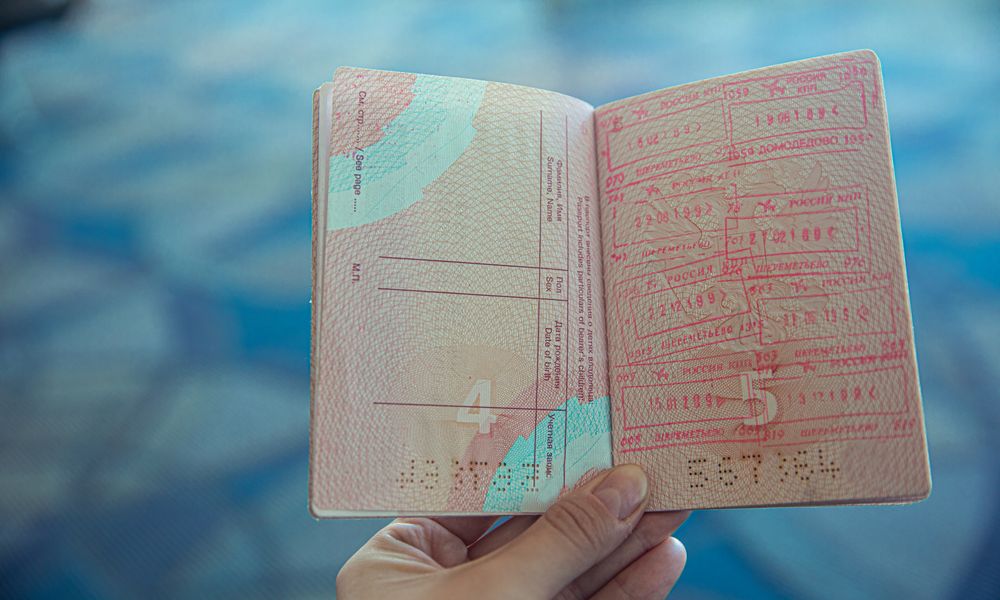
Comprehensive Guide to Pakistan Visa Types and Nationality Eligibility
To understand what entry pathway you must take, you must locate your specific passport nationality within Pakistan's categorized immigration framework. Because regulations fluctuate based on bilateral relations and security pacts, the entry rules are split into four main categories: Visa-Free / Visa-on-Arrival (exclusive to Gulf countries), Standard Paid e-Visa (the vast majority of Western nations), Embassy / Physical Visa (restricted nations), and Overseas Pakistani exemptions.
1. Visa-Free Entry and Visa on Arrival (GCC Nationals)
In an effort to foster tourism and investment from the Middle East, Pakistan continues to offer premium entry privileges to members of the Gulf Cooperation Council (GCC). Citizens holding ordinary passports from the following nations do not require an advance visa and are eligible for a free Visa on Arrival (VOA) valid for up to 90 days:
- Saudi Arabia
- United Arab Emirates (UAE)
- Bahrain
- Kuwait
- Oman
- Qatar
Additionally, citizens of the Maldives are exempt from visa requirements for up to 90 days, and citizens of Nepal are exempt for up to 30 days. This represents the most frictionless entry pathway into the country in 2026.
2. The Standard Paid e-Visa (Western and International Passports)
If you hold a passport from any of the following regions, you must apply for a standard, paid Tourist e-Visa or Business e-Visa before departing your home country. This category applies to over 180 countries, including:
- United States, Canada, and Mexico
- United Kingdom
- European Union Member States (Germany, France, Italy, Spain, Netherlands, Poland, etc.)
- Australia and New Zealand
- Japan, South Korea, and Singapore
- Most Central and South American nations
For these travelers, standard processing times of 7 to 10 business days apply, and a non-refundable application fee must be paid online. The visa is typically issued as a single-entry permit valid for a stay of 30 to 90 days, with validity commencing from the date of entry.
3. Visa on Arrival (VOA) via Licensed Tour Operators
While the individual Visa on Arrival program was suspended for most nationalities, an exception exists for organized tour groups. Citizens of designated tourist-friendly countries traveling in a group through a licensed, registered Pakistani tour operator may be eligible for a Tour Group Visa on Arrival. To qualify, your tour operator must submit your passport details, itinerary, and registration documents to the Federal Investigation Agency (FIA) and NADRA at least 15 days prior to arrival to secure a travel approval letter. This is not available to independent, solo travelers.
4. Embassy-Only / Physically Vetted Visas (Restricted Passports)
Certain passport holders are entirely barred from using the e-Visa portal and must apply for a physical visa sticker through a Pakistani diplomatic mission in their country of legal residence. This process is subject to strict, multi-agency vetting by the Ministry of Interior:
- Indian Passport Holders: Indian citizens (and dual nationals of Indian origin) face the most stringent requirements. They cannot apply for an e-Visa and must apply in-person or via post at a Pakistani consulate. Upon entry, they are subjected to mandatory police registration within 24 hours of arrival, regardless of their visa category, and their movement is restricted to pre-approved cities.
- Armenian Passport Holders: Due to lack of formal diplomatic relations, Armenian citizens are generally ineligible for standard tourist visas and must secure official state-level invitation clearance.
- Israeli Passport Holders: Israeli passports are not recognized for entry into Pakistan, and visas are not issued under normal circumstances.
5. Overseas Pakistanis (POC and NICOP Holders)
If you are a member of the Pakistani diaspora, you may bypass the visa application process entirely. Foreign nationals who hold a valid National Identity Card for Overseas Pakistanis (NICOP) or a Pakistan Origin Card (POC) are granted visa-free entry privileges. When traveling, you simply present your foreign passport alongside your physical, valid POC or NICOP card to immigration officers to receive an entry stamp.

Step-by-Step Guide to Applying for a Pakistan e-Visa in 2026
Applying for a Pakistan e-Visa requires navigating the official online portal run by the National Database and Registration Authority (NADRA). It is imperative that you only utilize the official government website. Avoid third-party commercial visa assistance sites that charge exorbitant markups or collect sensitive biographical data without authorization. The official portal is accessible at Pakistan Online Visa System (NADRA).
Follow these precise steps to complete your online application:
Step 1: Account Creation and Verification
Navigate to the NADRA visa website and click on "Apply Now". You must register for a new account by providing your email address, legal name, and mobile phone number. A verification code and link will be emailed to you. Once verified, set up a secure password and enable two-factor authentication (2FA) for your security.
Step 2: Start a New Application and Select Category
Once logged in, click "New Application". You will be prompted to select your visa category. For leisure travelers, select "Tourist/Visit Visa". If you are visiting family, select "Family Visit Visa". For business purposes, choose "Business Visa". Ensure you select "Ordinary Passport" as your document type, unless you hold an official diplomatic or UN passport, as selecting the wrong category will result in immediate rejection without a refund.
Step 3: Complete the Online Biographical Form
Fill out the application pages with meticulous accuracy. You will need to provide your full legal name, date of birth, passport details, current employment status, permanent address, and contact number. You must also supply information about your parent's names and places of birth, your planned arrival port (such as Islamabad, Lahore, or Karachi), and your exact travel dates.
Step 4: Upload Required Documents in the Correct Formats
The NADRA portal is highly strict regarding document file sizes and formats. If your uploads do not comply, the system will reject the application or freeze your session. Prepare these documents in advance:
- Passport Bio-Data Page: A high-resolution, cropped color scan of your passport bio page. The scan must clearly show the Machine Readable Zone (MRZ) at the bottom. File size must be under 1MB, in JPG or PDF format.
- Digital Passport Photo: A recent professional photo with a plain, solid white background. Your face must be in clear focus, with no glasses, hats, or headcoverings (unless for religious purposes, in which case facial features must remain completely visible). File size must be under 350KB, in JPG format.
- Letter of Invitation (LOI): An LOI is a critical requirement for most tourist applications. This must be provided by a registered Pakistani tour operator or a legal host residing in Pakistan. If provided by an individual host, it must be accompanied by a copy of the host's valid CNIC (Computerized National Identity Card) and a utility bill verifying their physical address.
- Confirmed Hotel Booking: If you are traveling independently without an LOI, you must upload a confirmed booking voucher from a reputable hotel or hostel covering your entire stay.
- Travel Itinerary: A simple PDF outlining your daily travel plans, sightseeing destinations, and domestic transportation arrangements.
- Proof of Legal Residence: If you are applying from a country other than your country of citizenship, you must upload a copy of your valid residence permit, long-term visa, or work authorization.
Step 5: Pay the Visa Application Fee
Once your documents are uploaded, you will proceed to the payment gateway. You must pay using a valid credit or debit card (Visa, Mastercard, or UnionPay are widely accepted). The visa fee varies dynamically based on your nationality and the visa category:
- U.S. Passport Holders: Approximately $60 USD for a single-entry tourist visa.
- UK Passport Holders: Approximately $60 USD.
- Canadian Passport Holders: Approximately $50 USD.
- EU and Australian Passport Holders: Typically ranges between $35 to $50 USD.
Note that all fees are non-refundable, regardless of whether your visa is approved, delayed, or rejected. Ensure all details are 100% accurate before clicking submit.
Step 6: Receive and Print Your Visa Grant Notice
Once submitted, your application will enter processing. You can track its progress by logging back into the NADRA portal. Once approved, you will receive an email containing a PDF document called the Visa Grant Notice. You must print a physical copy of this document. Keep it tucked safely inside your passport, as immigration officers at airport borders and domestic checkpoints will demand to inspect the physical copy alongside your passport.

Border Crossing Rules: Overland Entry and Restricted Zones
While the vast majority of international visitors arrive in Pakistan via the modern international terminals of Islamabad (ISB), Lahore (LHE), or Karachi (KHI), overland journeys remain popular for regional travelers, cyclists, and Silk Road explorers. If you are crossing land borders, you must adhere to additional rules, as land ports operate under distinct security and operational schedules.
1. The Wagah Border Crossing (with India)
The Wagah land border connects Amritsar in Punjab, India, with Lahore in Punjab, Pakistan. It is the only open land crossing for international tourists between the two countries. To cross here, your e-Visa must specifically list "Wagah Border" as your port of entry. The crossing is open daily from approximately 10:00 AM to 4:00 PM, but you should arrive early to allow for extensive baggage checks, customs declarations, and immigration queues on both sides. Be aware that the border closes during the famous daily evening flag-lowering ceremony.
2. The Khunjerab Pass Crossing (with China)
Connecting Tashkurgan in Xinjiang, China, with Gilgit-Baltistan, Pakistan via the Karakoram Highway, the Khunjerab Pass is the highest paved international border crossing in the world (4,693 meters). Because of extreme alpine weather and heavy snow accumulation, the crossing is strictly seasonal. The Khunjerab Pass is legally closed to all travelers from November 1 to April 30 each year. It only opens for overland transit between May 1 and October 31. Ensure your visa is valid for overland entry, and carry warm clothing, as temperatures at the pass remain below freezing even in summer.
3. The Taftan Border Crossing (with Iran)
The Taftan border links the Balochistan province of Pakistan with Mirjaveh, Iran. This route is frequented by overlanders, but the security climate throughout Balochistan is highly volatile. Consequently, Pakistani security forces enforce a mandatory armed escort system (Levies) for all foreign travelers entering overland via Taftan. Upon crossing, you will not be permitted to travel independently; instead, you will be escorted from checkpoint to checkpoint until you reach Quetta, from where you can fly or take a train to safer regions. Verify current regional safety directives on our travel safety blog before attempting this route.
4. Restricted Areas and the No-Objection Certificate (NOC)
Even with a valid visa, foreigners are not permitted to travel freely in all parts of Pakistan. Certain regions are designated as "Restricted Areas" or "Prohibited Zones" due to military operations, border proximity, or tribal governance. To visit these zones, you must apply for a No-Objection Certificate (NOC) from the Ministry of Interior. These areas include:
- Areas within 10 miles of the Line of Control (LoC) in Azad Jammu & Kashmir (AJ&K).
- Areas within 30 miles of the western borders with Afghanistan (including parts of Khyber Pakhtunkhwa).
- Certain remote valleys in the northern districts of Chitral, Gilgit, and Baltistan that border the Wakhan Corridor.
- The majority of the interior of Balochistan province.
Applying for an NOC can take anywhere from 4 to 8 weeks and requires submitting a formal application, passport copies, local host details, and a clear travel justification. Traveling to restricted zones without a valid NOC can result in detention, deportation, or being turned back at security checkpoints.
Transit Visas, Overstay Penalties, and Health Requirements
To avoid serious legal complications, all travelers must familiarize themselves with the laws surrounding transit stops, visa expiration dates, and necessary medical credentials before landing in Pakistan.
Transit Visa Requirements
If you are transiting through a Pakistani airport to a third-party destination, you do not require a transit visa provided that your layover is under 24 hours, you hold confirmed onward tickets, and you do not leave the airport's designated transit lounge. However, if your layover exceeds 24 hours, or if you plan to clear immigration, collect your luggage, and stay at an airport hotel, you must apply for a Transit Visa in advance via the NADRA online system. The transit visa is typically valid for up to 72 hours.
Overstay Penalties and Fines
Overstaying a visa is a serious immigration offense in Pakistan, and the Ministry of Interior strictly enforces penalties in 2026. If your visa is nearing its expiration and you need to extend your stay, you must submit an extension application on the NADRA portal while your visa is still active. If you allow your visa to expire, you will be unable to clear airport immigration to leave the country without obtaining an official Exit Permit.
The financial and legal consequences of overstaying are structured as follows:
- Overstays up to 2 weeks: Subject to an administrative fine of approximately $50 USD, payable online through the NADRA portal to secure an Exit Permit.
- Overstays from 2 weeks to 1 month: Fines increase to approximately $100 to $200 USD, and you may face mandatory interviews with immigration officials.
- Overstays exceeding 1 month: Can result in significant fines (up to $500+ USD), formal blacklisting, immediate deportation, and a multi-year ban from re-entering Pakistan. In extreme cases of willful visa violation, criminal detention may occur.
Mandatory Vaccination and Health Rules
Depending on your travel history and length of stay, you may need to present specific international health certificates upon arrival or departure. This is enforced to align with guidelines from the World Health Organization (WHO) and the U.S. Centers for Disease Control and Prevention (CDC):
- Yellow Fever Vaccine: If you are arriving from a country with a known risk of yellow fever transmission (primarily located in parts of sub-Saharan Africa and tropical South America), you must present a valid physical **Yellow Fever vaccination certificate**. This is strictly enforced for travelers aged 1 year and older.
- Polio Vaccine (Departure Requirement): Pakistan is one of the few countries where wild poliovirus transmission remains active. Consequently, under WHO temporary recommendations, any traveler who resides in or stays in Pakistan for more than 4 weeks is legally required to receive a polio booster dose and obtain a Polio Vaccination Certificate before departing the country. This card must be presented at the airport upon exit. Countries like Saudi Arabia, India, and Australia strictly verify these polio cards for passengers arriving from Pakistan.
How TripGuard360 Keeps You Protected Against Sudden Entry Changes
If there is one key lesson to learn from the sudden suspension of the free VPA program in 2026, it is that visa policies and entry rules can change overnight without formal government announcements or warning. A border that was open and free on Monday can suddenly require paid, heavily vetted e-visas and a 10-day waiting period on Tuesday. For travelers who have spent thousands of dollars on non-refundable flights, hotel reservations, and tour deposits, these sudden policy shifts can result in devastating financial losses and ruined vacation plans.
This is where TripGuard360 becomes an indispensable tool for the modern traveler. TripGuard360 is an advanced, comprehensive travel safety monitoring engine that tracks worldwide visa policies, security advisories, health mandates, and border status updates in real-time. Powered by cutting-edge Gemini AI, TripGuard360 continuously scans hundreds of official embassy websites, consular portals (including the NADRA network), civil aviation databases, and international travel advisories 24 hours a day, 7 days a week.
The moment a country updates its entry requirements, changes its visa fees, suspends a visa-on-arrival program, or issues a health mandate, TripGuard360's AI engine instantly processes the data and sends immediate, localized alerts directly to your phone via Telegram and Email. Whether you are at home planning your trip, waiting in transit at an international airport, or approaching a remote land border crossing, TripGuard360 ensures you are never caught off guard. You will receive precise information on exactly what changed, what documents you now need, and how to swiftly adapt your itinerary—protecting you from being denied boarding at check-in or turned back at immigration control. Don't leave your travel security to chance; let TripGuard360 monitor the borders for you so you can focus on the journey ahead.