Ukraine Entry Rules 2026: Visa Fees, Documents & Changes
Ukraine Visa Requirements 2026 Entry Rules: Complete Guide
Traveling to Ukraine in 2026 requires a fundamentally different level of preparation than visiting standard European destinations. Because the country continues to operate under nationwide martial law, its borders are subject to heightened security, strict document auditing, and unique physical entry constraints. If you are planning a journey to Kyiv, Lviv, or other parts of the country, navigating the ukraine visa requirements 2026 entry rules is your first and most critical hurdle. Simply showing up at a land border with a passport is no longer sufficient; border guards exercise immense discretion, and missing even a minor piece of documentation can lead to an immediate denial of entry.
As of May 2026, the airspace over Ukraine remains completely closed to civilian aircraft, meaning all foreign nationals must enter through designated land border checkpoints shared with neighboring European Union countries or Moldova. While the physical act of crossing has changed, Ukraine's sovereign immigration laws remain fully operational. This means that depending on your nationality, you will either benefit from a visa-free regime, qualify for an online e-Visa, or be required to secure a physical embassy visa (sticker visa) from a Ukrainian diplomatic mission abroad before your trip.
Due to the security situation, international travel warnings from entities like the US Department of State and the UK Foreign, Commonwealth & Development Office (FCDO) maintain a strict Level 4 "Do Not Travel" advisory for Ukraine. However, for humanitarian workers, journalists, business representatives, and those with compelling family reasons, entry is fully permitted, provided you comply with all current administrative and security regulations. To ensure your trip is not cut short at the border, this guide provides an exhaustive breakdown of every rule, document, fee, and procedure you must know before you pack your bags.
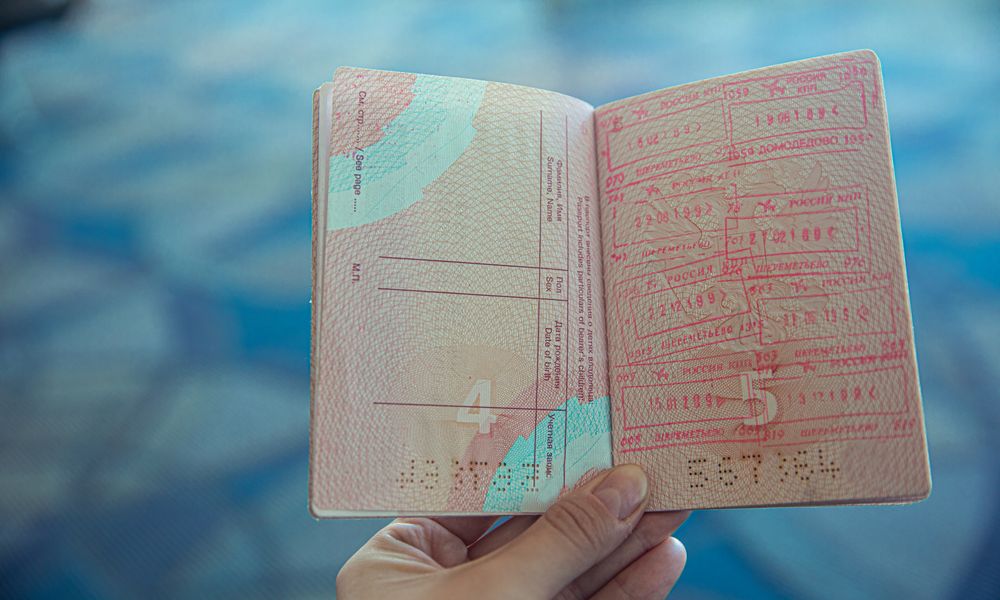
Understanding the Ukraine Visa Requirements 2026 Entry Rules for Your Nationality
The Ministry of Foreign Affairs of Ukraine categorizes all foreign passports into three distinct categories: visa-exempt nationalities, countries eligible for an electronic visa (e-Visa), and nationalities that must undergo traditional consular visa processing. Regardless of your category, your travel must be supported by a valid passport and a comprehensive set of supporting documents, which will be verified by the State Border Guard Service of Ukraine at your port of entry.
Visa-Free Entry (Up to 90 Days)
Ukraine maintains reciprocal visa-waiver agreements with over 60 countries. Citizens of these nations do not need to apply for a visa in advance for short-term stays, which include tourism, private visits, short-term business negotiations, or attending cultural and scientific events. Under the standard 90/180 rolling rule, visa-free travelers can stay in Ukraine for a maximum of 90 days within any 180-day period.
This 180-day window is calculated on a rolling basis, looking backward from any day of your stay. Exceeding this limit without a temporary residence permit will result in immediate fines and a potential re-entry ban. Below is a comprehensive list of major nationalities that qualify for visa-free entry into Ukraine for up to 90 days:
- All European Union Member States (Austria, Belgium, Bulgaria, Croatia, Cyprus, Czech Republic, Denmark, Estonia, Finland, France, Germany, Greece, Hungary, Ireland, Italy, Latvia, Lithuania, Luxembourg, Malta, Netherlands, Poland, Portugal, Romania, Slovakia, Slovenia, Spain, Sweden)
- United States
- United Kingdom
- Canada
- Australia
- New Zealand
- Japan
- South Korea
- Israel
- Brazil (up to 90 days per year)
- Switzerland, Norway, Iceland, and Liechtenstein
- Turkey (eligible for entry using a biometric national ID card; passports are not strictly required but are highly recommended)
- Georgia (eligible for entry using a biometric national ID card)
- United Arab Emirates, Saudi Arabia, Qatar, Kuwait, Bahrain, and Oman
- Armenia, Azerbaijan, Moldova, Kazakhstan, Kyrgyzstan, Tajikistan, and Uzbekistan
If you hold a passport from one of these countries, you do not need to submit any paperwork to a consulate. However, you must still present your physical passport, proof of health insurance (with war risk coverage), proof of sufficient funds, and accommodation details to the border guards. You can find detailed safety tips for navigating these border gates on our travel safety blog.
Who Needs a Ukraine e-Visa?
The electronic visa program is designed to simplify the application process for citizens of 45 specified countries. The e-Visa is an official document issued digitally by the Ministry of Foreign Affairs of Ukraine. It allows for a maximum stay of up to 30 days and can be issued for single or double entry. The permitted purposes of travel under an e-Visa include tourism, business, private visits, medical treatment, cultural/scientific/sporting activities, and foreign media staff assignments.
The following nationalities are eligible to apply for a Ukraine e-Visa online:
| Continent / Region | Eligible Nationalities for e-Visa |
|---|---|
| Asia & Middle East | India, China, Indonesia, Malaysia, Singapore, Thailand, Philippines, Nepal, Bhutan, Cambodia, Laos, Myanmar |
| Americas | Mexico, Peru, Bolivia, Costa Rica, Dominican Republic, El Salvador, Guatemala, Honduras, Jamaica, Bahamas, Barbados, Belize, Dominica, Grenada, Saint Kitts and Nevis, Saint Lucia, Saint Vincent and the Grenadines, Suriname, Trinidad and Tobago |
| Africa | South Africa, Seychelles, Mauritius |
| Oceania | Fiji, Micronesia, Nauru, Palau, Samoa, Tuvalu, Vanuatu |
If your country of citizenship is on this list, you should not visit an embassy. Applying for an e-Visa is done entirely online and is much faster than traditional visa processing.
Regular Embassy Visa (Type C and Type D)
If your nationality is not listed in either the visa-free or e-Visa categories, you must apply for a traditional physical sticker visa. Additionally, any traveler—regardless of nationality—who wishes to stay in Ukraine for longer than 90 days, or who intends to work, study, or undergo family reunification, must secure a long-term visa. These visas are divided into two main categories:
- Type C Short-Term Visa: For nationalities not eligible for visa-free travel or e-Visas who wish to visit Ukraine for up to 90 days within a 180-day period. This requires submitting physical documents to a Ukrainian Embassy, Consulate, or authorized VFS Global visa application center.
- Type D Long-Term Visa: Required for all foreign nationals planning to apply for a temporary or permanent residence permit in Ukraine (e.g., for employment, university studies, volunteering, or marriage to a Ukrainian citizen). The **Type D visa** is a multiple-entry visa valid for 90 days, during which you must enter Ukraine and submit your residence permit application to the State Migration Service (SMS) at least 15 working days before the visa expires.
Nationalities requiring a regular embassy visa for all visits include Afghanistan, Algeria, Angola, Bangladesh, Cameroon, Egypt, Iraq, Iran, Nigeria, Pakistan, Syria, Vietnam, and Yemen. For more details on consular appointments globally, consult our travel guides.
Step-by-Step Ukraine e-Visa Application Process
For travelers eligible for the digital pathway, the e-Visa platform offers an efficient and streamlined system. To ensure a successful application, you must register through the official Ministry of Foreign Affairs of Ukraine e-Visa portal and follow these precise steps:
- Account Registration: Visit the official MFA e-Visa portal, click "Register," and create an account using a valid email address. You will receive an activation link via email. Click this link to verify your account (check your spam folder if it does not arrive within a few minutes).
- Fill Out the Application Form: Log in to your personal cabinet and select "New Application." Choose your visa type as **Short-Stay Visa (Type C)** and select your specific purpose of travel (e.g., C-06 for Tourism, C-01 for Business). Complete every field in Latin characters exactly as they appear in your passport. **Do not leave any fields blank**; incomplete applications are automatically rejected.
- Upload Supporting Documents: You must upload clear, high-resolution scans of your supporting documents. These must be in JPEG or PDF format, with file sizes kept under 5MB. The required uploads include your passport data page, a recent passport-sized photo, your medical insurance policy, proof of sufficient funds, and accommodation bookings.
- Pay the Application Fee: Pay the processing fee securely online using a credit or debit card (Visa or Mastercard). Once payment is processed, you will receive a receipt, and your application status will update to "Under Consideration."
- Receive Your Approved e-Visa: Once a decision is made, you will receive an email notification. Log back into the MFA portal, download your approved e-Visa in PDF format, and **print a physical paper copy**. You must present this paper copy alongside your passport at the border crossing. Digital copies on smartphones may not be accepted by border officials.

e-Visa Fees and Processing Times
When planning your application, you must factor in both the administrative fees and the official processing times. The Ministry of Foreign Affairs of Ukraine outlines a clear fee structure for digital applications:
- Single-Entry e-Visa Fee: The standard fee is $20 USD. This permits one entry into the country for a stay of up to 30 days.
- Double-Entry e-Visa Fee: The standard fee is $30 USD. This allows you to enter Ukraine twice within the visa's validity window, with the total cumulative stay not exceeding 30 days.
- Urgent Processing Fee: If you require your e-Visa on short notice, you can select the urgent processing pathway. Selecting this option **doubles the application fee** to $40 USD for a single-entry visa and $60 USD for a double-entry visa.
The official processing timelines are strictly defined. A standard, non-urgent e-Visa application is processed within 3 working days from the date of submission. If you choose the urgent registration procedure, your application will be processed within 1 working day. Despite these quick turnarounds, it is highly recommended to apply at least 10 to 15 days before your scheduled departure to account for any potential document requests or administrative delays.
Required Documents for a Ukraine Visa
To successfully obtain a visa (whether e-Visa or consular sticker) and successfully cross the border, you must compile a robust portfolio of physical and digital documentation. Ukrainian border guards inspect these items with extreme care. The core documentation list includes:
- Passport Validity: Your passport must be an **original physical passport** valid for at least **3 months after your intended date of departure** from Ukraine. It must have been issued within the last 10 years and contain at least **2 blank passport pages** free from any stamps or marks.
- Proof of Sufficient Funds: Foreigners must prove they possess enough financial resources to support their stay and subsequent departure. Under Cabinet of Ministers Resolution No. 884, the required amount is calculated using a specific mathematical formula: **(20 x Subsistence Minimum / 30 days) x (planned days of stay + 5 days)**. In practice, the daily requirement translates to approximately UAH 2,020 (approx. $50 USD) per day, with an added 5-day buffer. For example, if you plan to stay in Ukraine for 10 days, you must show:
(UAH 2,020 x 10) + (UAH 2,020 x 5) = UAH 30,300 (approx. $750 USD).
You can prove this by presenting bank-certified account statements for the last 3 to 6 months, traveler's checks, cash in convertible currency, or a notarized letter of guarantee from your sponsor. For **Type D long-term visas**, VFS Global guidelines state you must show a minimum account balance of $7,600 USD supported by a 3-month bank statement. - Health Insurance Policy (Minimum 30,000 EUR Coverage): You must present a valid medical insurance policy with a minimum coverage limit of 30,000 EUR (or its equivalent in another currency). Crucially, the policy must explicitly state that its territorial coverage includes Ukraine. Most standard global travel insurances exclude countries under active war zones; therefore, you must purchase a specialized policy that specifically **covers active and passive war risks** in Ukraine.
- Proof of Accommodation: You must provide concrete evidence of where you will reside. This can take the form of a confirmed hotel booking, an apartment rental agreement, or an official, notary-certified **letter of invitation** from a Ukrainian citizen or legal entity. If you are staying with friends or family, they must draft an invitation at a local notary in Ukraine and mail the original physical copy to you prior to your trip.
- Onward or Return Ticket: Because commercial flights do not operate, you must present a confirmed onward or return land travel ticket. This includes international train bookings (e.g., Ukrainian Railways/Ukrzaliznytsia sleeper trains) or international bus tickets (e.g., FlixBus) departing Ukraine to a safe third country.
Critical Border Crossing and Transit Rules under Martial Law
Because the conflict remains active, entering Ukraine is fundamentally different from traveling in the Schengen Area. The State Border Guard Service of Ukraine enforces rigorous security protocols at all operating land borders. Knowing the specific logistical realities of these land crossings is essential to avoid being turned around or stranded at the border.

Land Border Checkpoints and Airspace Closure
With civil airspace closed, your journey must begin by traveling to a neighboring country—usually Poland, Slovakia, Hungary, Romania, or Moldova—and then crossing the border by train, bus, or private vehicle. Due to the high volume of humanitarian, military, cargo, and passenger traffic, border queues can be exceptionally long, sometimes ranging from 2 to 24 hours.
The main operational border checkpoints in 2026 include:
- Poland - Ukraine Borders:
- Shehyni - Medyka: Highly popular, accommodates both vehicles and pedestrian traffic. Excellent train and bus connections.
- Krakovets - Korczowa: Strictly for vehicles and buses; no pedestrian crossing allowed.
- Yahodyn - Dorohusk: Chiefly handles cargo and heavy passenger bus traffic.
- Slovakia - Ukraine Borders:
- Uzhhorod - Vyšné Nemecké: Open for passenger cars and buses. Very close to the western Ukrainian city of Uzhhorod.
- Malyi Bereznyi - Ubľa: Open for vehicles up to 3.5 tons and pedestrians.
- Hungary - Ukraine Borders:
- Chop (Tysa) - Záhony: Major rail and road crossing point, heavily used by international trains.
- Luzhanka - Beregsurány: Frequently used by passenger cars to bypass larger queues.
- Romania - Ukraine Borders:
- Porubne - Siret: Located in the southwest, connects Romania with Chernivtsi. Very active passenger crossing.
- Solotvyno - Sighetu Marmației: A historic wooden bridge crossing suitable for light vehicles and pedestrians.
- Moldova - Ukraine Borders:
- Mohyliv-Podilskyi - Otaci: Main crossing in the southern region.
- Palanca - Maiaki-Udobne: Heavily utilized road connecting southern Moldova to the Odesa region.
Critical Security Warning: All border checkpoints with Russia, Belarus, and the occupied Transnistria region of Moldova are **permanently closed**. Attempting to approach or cross these closed borders is illegal and will result in immediate arrest and prosecution under military law.
Transit Visa (Type B) Requirements
If your final destination is not Ukraine, but you must pass through Ukrainian territory to reach a third country (such as traveling between Moldova and Central Europe), you may need a **Transit Visa (Type B)**. Transit visas are required for citizens of countries that do not have a visa-waiver agreement with Ukraine.
A **Type B visa** is issued for stays of up to **5 days** per transit. It can be issued as single, double, or multiple entry depending on your itinerary, and has a maximum overall validity of 1 year. To apply, you must present the same core documents as a regular visa, along with proof of your visa for the next destination country (if applicable) and confirmed onward transport tickets. If you do not require a visa for the next country, you must still present your entry permit or passport of that nation.
Overstay Penalties and Deportation Laws
Ukraine enforces its immigration limits with extreme severity. Under Article 203 of the Administrative Code of Ukraine, overstaying your permitted visa-free window (90 days) or your visa's validity date is classified as an administrative immigration offense. The consequences are strict:
- Financial Fines: Fines range from UAH 1,700 to UAH 5,100. The exact amount is determined by the State Migration Service or border guards based on the duration of your overstay. Fines must be paid at a bank; border guards do not accept cash payments directly.
- Administrative Deportation: If you are caught with an expired visa or overstayed status within the country, you will be formally ordered to leave the country voluntarily within a specified timeframe (usually 5 to 30 days) at your own expense. If you refuse, physical deportation will be enforced.
- Re-entry Bans: Overstaying almost always triggers a formal re-entry ban. First-time, minor overstays typically result in a 3-year ban on entering Ukraine. If you attempt to enter illegally, ignore a voluntary departure order, or are a repeat offender, the ban can be extended to 10 years or more.
Under martial law, border guards cross-reference all entry and exit stamps against a centralized biometric database. Excuses such as "I didn't know the rules" or "my train was delayed" are not accepted. Ensure your departure is scheduled comfortably before your permit expires.
Recent Entry Rule Changes in May 2026
The security and administrative landscape in Ukraine is highly fluid. In May 2026, several critical regulatory adjustments were implemented that directly affect all incoming foreign travelers. Staying compliant with these latest decrees is essential to avoid detention, fines, or border refusals:
- Extension of Martial Law: President Volodymyr Zelenskyy has officially signed decrees extending nationwide martial law and general mobilization to August 2026. This extension keeps all wartime regulations fully active, including strict nightly curfews, military checkpoints on major highways, and expanded powers for law enforcement to conduct random identity and bag searches.
- Mandatory War-Risk Travel Insurance: While medical insurance has always been a requirement, border guards in May 2026 are actively auditing policies to confirm they **specifically cover war-related injuries, shellings, and passive military risks**. Standard global travel insurance certificates that contain general "war exclusions" are being rejected at the border, leading to immediate turnbacks.
- Schengen Entry/Exit System (EES) Integration: For travelers transiting through EU nations (Poland, Hungary, Slovakia, Romania) to enter Ukraine, the EU's newly implemented **biometric Entry/Exit System (EES)** is fully active. This system replaces manual passport stamping at the EU border with automated biometric kiosks (facial scans and fingerprints). Foreigners returning to the EU from Ukraine must ensure their biometrics are updated correctly at the EU border gates to prevent transit delays.
- Bans on Dashcams, Drones, and Photography: Under martial law, operating a drone or possessing a civilian dashcam in your vehicle is strictly illegal. Taking photographs or recording videos of military personnel, checkpoints, bridges, energy infrastructure, or damaged buildings is classified as espionage. Violating these bans will result in immediate detention by territorial defense units and the confiscation of your equipment.
- Strict Curfew Compliance: Every region (oblast) in Ukraine enforces a nightly curfew (komendantska hodyna). For example, in Kyiv, the curfew runs from 00:00 to 05:00. During these hours, being on the street without a special military pass is strictly illegal. Travelers arriving on late-night international trains must remain inside the train station until the curfew ends at 05:00.

How TripGuard360 Keeps You Safe in a Rapidly Changing Travel Landscape
In a world where geopolitics, security measures, and immigration policies can shift overnight, relying on static travel advice is a recipe for disaster. This is especially true for volatile travel zones like Ukraine. A visa rule or border crossing policy that was perfectly valid when you booked your train ticket could be completely revised by the time you reach the border checkpoint.
This is where TripGuard360 changes the game. TripGuard360 is a cutting-edge travel safety and compliance platform designed to ensure you are never caught off guard at a border. Utilizing advanced Gemini AI, TripGuard360 monitors official government portals, embassy updates, border guard press releases, and global travel advisories 24 hours a day, 7 days a week.
The moment a country—including Ukraine or any of your transit nations like Poland or Romania—updates its entry requirements, visa fees, passport validity rules, or security curfews, TripGuard360's AI detects the change instantly. The system immediately parses the updated law and sends a personalized, real-time alert directly to your phone via Telegram and Email. Whether you are already in transit, waiting in a border queue, or planning a trip three months from now, TripGuard360 ensures you have the absolute latest, verified intelligence at your fingertips. With TripGuard360, you can travel with complete confidence, knowing that you will be the first to know of any policy changes before they impact your journey.