Yellow Fever & Travel Vaccines 2026: Mandatory Entry Rules
As the landscape of global travel continues to complexify in 2026, international adventurers face a more intricate health and regulatory environment than ever before. With rising temperatures expanding vector-borne disease zones and recent shifts in regional disease distribution, keeping up with mandatory entry health protocols is no longer optional—it is a critical necessity for crossing borders safely. Navigating the rules of international border health controls requires an in-depth understanding of vaccine protocols, timing, and official documentation. Failing to meet these standards can result in delayed flights, denied entry, or expensive mandatory quarantines.
This comprehensive travel health guide provides an authoritative roadmap to navigating yellow fever vaccination requirements international travel 2026, alongside updates on essential recommended immunizations, current global disease outbreaks, food and water safety protocols, and real-time advisory tracking systems. By preparing four to six weeks before your departure, you can safeguard your physical health and ensure a seamless entry into your destination. For more expert advice on securing your health and security while abroad, check out our travel safety blog.
Understanding Yellow Fever Vaccination Requirements International Travel 2026
Mandatory Entry Requirements vs. Medical Recommendations
One of the most common points of confusion for travelers is the distinction between a vaccine that is legally required for entry and one that is medically recommended for personal protection. Vaccine requirements are legal instruments of biosecurity. They are established by individual sovereign nations under the framework of the International Health Regulations to prevent the importation and establishment of transmissible diseases like yellow fever. According to the CDC Travelers' Health portal, more than a hundred countries require proof of vaccination under specific conditions. Medical recommendations, on the other hand, are designed to protect you, the individual, from contracting a disease based on the local risks of your destination, regardless of whether the government requires proof at the border.
The Lifetime Validity of the "Yellow Card" (ICVP)
To legally prove vaccination, travelers must present an official International Certificate of Vaccination or Prophylaxis (ICVP), widely recognized as the "Yellow Card". This document must be completed, signed, and stamped by an officially authorized travel clinic. Crucially, under the amended regulations adopted by the World Health Organization, the validity of the yellow fever vaccine certificate is lifelong. Previously, booster shots were required every ten years to maintain travel eligibility. However, the World Health Organization (WHO) Travel Advice guidelines establish that a single, standard dose of the live-attenuated yellow fever vaccine (such as Stamaril or YF-VAX) provides lifelong immunity, meaning your Yellow Card never expires, regardless of the 'validity date' printed on older certificates.
CRITICAL WARNING: Late vaccination can result in immediate denial of entry or mandatory quarantine at your own expense at the border! Under international law, your Yellow Card only becomes legally valid 10 days after the primary dose is administered. This is the minimum time required for your immune system to develop protective neutralizing antibodies. If you arrive at border control on day 9 post-vaccine, you may be barred from entry or placed in a medical holding facility.
How Transit Rules Can Trigger Mandates
Another major trap for international travelers is the "transit rule." Many countries that have no native risk of yellow fever transmission—such as Singapore, India, South Africa, or Australia—maintain strict entry regulations to prevent the virus from being introduced to local mosquito populations (specifically the Aedes aegypti vector). If you travel from a non-endemic country (e.g., the United States or United Kingdom) to one of these destinations, but your flight transits through an endemic country (such as Kenya, Panama, Colombia, or Brazil), you may be required to show your Yellow Card upon arrival. Typically, these requirements apply if the transit period in the endemic country exceeds 12 hours, but some strict jurisdictions enforce it for any transit, even if you never leave the airport terminal.
WARNING: Failure to secure a yellow card prior to transiting an endemic country may result in mandatory quarantine or deportation. It is essential to consult the UK Foreign, Commonwealth & Development Office (FCDO) or the destination's official embassy website to confirm specific transit thresholds. Below is a detailed regional overview of where these requirements are strictly monitored:
- Sub-Saharan Africa (Endemic & Mandatory): Angola, Burundi, Cameroon, Central African Republic, Republic of the Congo, Democratic Republic of the Congo, Gabon, Ghana, Guinea, Ivory Coast, Liberia, Mali, Niger, Sierra Leone, Togo. All arrivals must present a valid Yellow Card regardless of their origin.
- South America (Endemic & High-Risk Areas): Brazil (specifically the Amazon basin and southern states), Bolivia, Colombia, Ecuador, French Guiana, Guyana, Peru, Suriname, Venezuela. While not all South American nations require the vaccine for entry, it is highly recommended for personal safety when visiting forested or rural zones.
- Non-Endemic Countries with Strict Transit/Entry Mandates: India, Singapore, South Africa, Australia, Thailand, Egypt, United Arab Emirates, Saudi Arabia. These countries mandate proof of vaccination if arriving from or transiting through an endemic country, even for layovers.

Comprehensive Vaccine Recommendations for Global Travel
Staying healthy abroad involves a combination of legal compliance and clinical prevention. Before departing on any international journey, travelers should consult a specialized travel health professional to assess their personal health history and target destination. To plan your itinerary with safety and regional insights in mind, explore our travel guides. The following sections break down the specific doses, timing, and clinical recommendations for the primary travel vaccines available in 2026.
Yellow Fever Vaccine: Doses and Timing
The yellow fever vaccine (commonly marketed under the brand names Stamaril or YF-VAX) is a live-attenuated viral vaccine. It is administered as a single subcutaneous injection of 0.5 mL. As noted, it must be completed at least 10 days before departure to allow the International Certificate of Vaccination or Prophylaxis (ICVP) to become legally valid. It is highly recommended for all travelers aged 9 months or older who are entering endemic regions of Sub-Saharan Africa or Central and South America. Because it is a live vaccine, it is generally contraindicated for infants under 9 months, pregnant individuals, breast-feeding mothers, and severely immunocompromised patients, who must instead obtain an official medical waiver letter from an authorized clinic to present at border control.
Hepatitis A and Hepatitis B
Hepatitis A is a highly contagious liver infection spread through contaminated food and water or close contact with an infected person. The Hepatitis A vaccine (such as Havrix or Vaqta) is highly recommended for almost all international travelers. The standard course consists of two intramuscular doses (0.5 mL for pediatric patients, 1.0 mL for adults). The first dose should be administered at least 2 to 4 weeks before travel for immediate protection. The second dose is a booster given 6 to 12 months (or up to 18 to 36 months depending on the specific formulation) after the first. A completed two-dose series offers robust, lifelong protection.
Hepatitis B is a viral infection transmitted through exposure to infectious blood or body fluids, contaminated medical equipment, or sexual contact. The Hepatitis B vaccine (such as Engerix-B or Recombivax HB) is recommended for travelers who may receive medical treatment abroad, work in healthcare settings, or engage in adventure sports where injury is a risk. The standard protocol requires three intramuscular doses administered at 0, 1, and 6 months. For travelers with last-minute departures, accelerated schedules are available—such as the Twinrix combination vaccine (protecting against both Hepatitis A and Hepatitis B) given at 0, 7, and 21 to 30 days, followed by a mandatory booster dose at 12 months to ensure long-term immunity.
Typhoid Fever and Cholera
Typhoid fever is a life-threatening bacterial infection caused by Salmonella enterica serovar Typhi, primarily transmitted through contaminated food and water in regions with poor sanitation. Travelers have two primary options for typhoid immunization:
- Vivotif (Oral Live Vaccine): Consists of 4 capsules taken orally on alternate days (Days 1, 3, 5, and 7). The capsules must be kept refrigerated and taken with cool water approximately one hour before a meal. The entire course must be completed at least 1 week prior to travel and provides protection for up to 5 years. It is approved for individuals aged 6 and older.
- Typhim Vi (Injectable Subunit Vaccine): Consists of a single intramuscular injection of 0.5 mL. It must be administered at least 2 weeks before travel to allow the body to mount an adequate antibody response. It provides protection for up to 2 years and is approved for individuals aged 2 and older.
Cholera is an acute diarrheal illness caused by infection of the intestine with the bacterium Vibrio cholerae. It is endemic in parts of Africa, Asia, and the Caribbean. Immunization is recommended for aid workers, healthcare personnel, and travelers visiting active outbreak zones. The oral vaccine Vaxchora is a single-dose, live-attenuated liquid vaccine taken at least 10 days before travel. Travelers must avoid eating or drinking for 60 minutes before and after taking the vaccine. Alternatively, Dukoral, an oral inactivated vaccine, requires two doses taken 1 to 6 weeks apart, with the final dose completed at least 1 week before departure.
Rabies: Pre-Exposure Prophylaxis
Rabies is a fatal viral disease transmitted through the saliva of infected mammals via bites, scratches, or licks on broken skin. The rabies vaccine (such as Imovax Rabies or RabAvert) is highly recommended for travelers spending significant time outdoors, working with animals, or visiting remote regions of Asia, Africa, and Central/South America where post-exposure medical care is delayed or unavailable. Under simplified modern guidelines, pre-exposure prophylaxis (PrEP) consists of two intramuscular doses of 1.0 mL administered on Day 0 and Day 7.
CRITICAL WARNING: Rabies pre-exposure prophylaxis does not eliminate the need for immediate medical treatment if you are exposed! Instead, it simplifies post-exposure treatment by eliminating the need for expensive and hard-to-find Rabies Immune Globulin (RIG) and reducing the post-bite vaccine requirement from four doses down to two doses (given on Days 0 and 3).
Malaria Chemoprophylaxis and Vector Prevention
Malaria is a severe and potentially fatal disease caused by Plasmodium parasites transmitted through the bites of infected female Anopheles mosquitoes. While next-generation malaria vaccines like RTS,S and R21 are deployed for pediatric populations in high-transmission areas of Africa, they are not currently approved or available for international tourists. Therefore, prevention for travelers relies heavily on chemoprophylaxis and bite prevention.
There are several highly effective antimalarial regimens, which must be selected based on the specific resistance patterns of the destination:
- Malarone (Atovaquone-proguanil): Taken as 1 daily tablet starting 1 to 2 days before entering the endemic area, daily while in the area, and continued for 7 days after departure. It is highly effective and has a favorable side-effect profile, though it can be expensive for long-term travel.
- Doxycycline: Taken as 1 daily 100 mg tablet starting 1 to 2 days before travel, daily during travel, and continued for 28 days after leaving the endemic zone. It is highly affordable but can increase susceptibility to sunburn and cause gastrointestinal irritation.
- Mefloquine: Taken as 1 weekly 250 mg tablet starting 2 to 3 weeks before travel, weekly during travel, and continued for 4 weeks after departure. WARNING: Mefloquine can cause severe neuropsychiatric side effects, including vivid dreams, anxiety, depression, and hallucinations. It is contraindicated for individuals with active or historical psychiatric conditions or seizure disorders.

Current Disease Outbreaks and WHO Health Alerts in 2026
The global infectious disease landscape in 2026 remains highly dynamic, characterized by concurrent outbreaks and emergency border restrictions. Staying updated on real-time alerts is vital for avoiding unexpected travel disruptions or severe health exposures. Travelers should consistently cross-reference their itineraries with official government advisories such as the U.S. Department of State Travel Advisories before departure.
The 2026 Ebola Outbreak in Central and East Africa
In May 2026, the World Health Organization declared a Public Health Emergency of International Concern (PHEIC) due to a major outbreak of Ebola virus disease in the Democratic Republic of the Congo (DRC) and neighboring Uganda. This particular outbreak is driven by the **Bundibugyo virus** (BVD) strain, which carries a high case-fatality rate ranging from 25% to 50%. Critically, unlike the Zaire strain of the virus, there are currently no approved vaccines or targeted therapeutic treatments for the Bundibugyo strain, meaning public health measures and border screening are the primary tools for containment.
In response to this outbreak, several nations have implemented strict health-specific entry restrictions. The United States government, via a joint directive by the CDC and Department of Homeland Security, has implemented an active Title 42 public health order. Under these emergency measures:
- All non-U.S. citizens who have been present in the Democratic Republic of the Congo, Uganda, or South Sudan within 21 days prior to arrival are restricted from entering the United States.
- U.S. citizens, permanent residents, and lawful visa holders returning from these affected regions must route their travel exclusively through designated airports for enhanced public health screenings. Currently, these designated airports include Washington Dulles International Airport (IAD), Hartsfield-Jackson Atlanta International Airport (ATL), and George Bush Intercontinental Airport (IAH) in Houston.
Other Active Alerts: Hantavirus, Dengue, Mpox, and Polio
Beyond the crisis in Central Africa, several other significant outbreaks are active across the globe in 2026. In May 2026, the WHO reported an unusual cluster of severe respiratory illness aboard an international cruise ship. Laboratory testing confirmed the illness as a hantavirus infection, specifically the Andes virus (ANDV) strain. The cluster led to several confirmed cases and multiple deaths among passengers and crew. National health authorities across the United Kingdom and Cabo Verde have initiated aggressive international contact tracing to monitor disembarked passengers, prompting heightened medical surveillance at European maritime and aviation hubs.
Furthermore, climate-driven expansions of mosquito habitats have fueled unprecedented surges of dengue and chikungunya. Sizable outbreaks are currently being monitored in South America (particularly Bolivia), Mayotte, the Seychelles, and holiday destinations across the Caribbean. Travelers to these areas must prioritize insect bite prevention using EPA-registered repellents, as no widely available vaccines protect general tourists against these specific vector threats.
Additionally, outbreaks of mpox (specifically the highly transmissible Clade 1b strain) continue to cause concern. While primarily concentrated in central Africa, sporadic imported cases have been confirmed in European nations, including Sweden and Austria. Meanwhile, vaccine-derived poliovirus continues to circulate in over 25 countries, prompting select destinations in Asia and the Middle East to mandate a booster dose of polio vaccine for visitors arriving from endemic zones. Finally, severe outbreaks of diphtheria are actively occurring in West African nations, particularly Guinea and Nigeria, highlighting the need for up-to-date routine immunizations.

Practical Travel Health: Food, Water, and Medical Care
While vaccinations provide a vital shield against specific pathogens, day-to-day behaviors are your primary defense against the most common travel illnesses. Taking basic precautions regarding what you consume and understanding the local healthcare infrastructure can prevent minor stomach upsets from spiraling into medical emergencies.
Safe Food and Water Practices
Contaminated food and water are the leading causes of traveler's diarrhea, which affects millions of tourists each year. It is caused by various bacteria, viruses, and parasites. The golden rule of food safety is simple: "Boil it, cook it, peel it, or forget it." Always choose hot, freshly cooked foods, and avoid street food stalls with low customer turnover. Avoid raw or undercooked meats, seafood, and raw vegetables (such as salads), which are frequently washed in contaminated tap water.
WARNING: Do not drink tap water, use ice of unknown origin, or consume raw shellfish while traveling in cholera-endemic regions. Stick to sealed, commercially bottled water for drinking, brushing your teeth, and mixing baby formula. When bottled water is unavailable, you must treat your water using one of the following reliable purification methods:
- Boiling: Bring water to a vigorous, rolling boil for at least 1 full minute. If you are traveling at altitudes above 2,000 meters (6,500 feet), boil the water for a minimum of 3 minutes.
- Chemical Disinfection: Use chlorine dioxide tablets or liquid drops. These are highly effective against bacteria, viruses, and protozoa (including Giardia and Cryptosporidium) and are widely available in outdoor supply stores. Follow the manufacturer's instruction closely regarding contact time.
- Ultraviolet (UV) Purification: Portable UV light devices (such as a SteriPEN) can rapidly destroy the DNA of bacteria, viruses, and protozoa in clear water. Ensure the water is free of sediment before exposing it to the UV light.
Assessing Medical Facility Quality and Travel Insurance
The standard of medical facilities varies dramatically across the globe. While major cities in developed nations offer state-of-the-art emergency care, medical infrastructure in resource-limited or remote regions may lack basic medications, sterile equipment, and specialized staff. If you suffer a severe injury or acute illness in a remote area of Sub-Saharan Africa, Southeast Asia, or the Amazon basin, local clinics may be unable to stabilize you.
Consequently, purchasing comprehensive travel health insurance is a non-negotiable prerequisite for international travel. Standard health insurance policies rarely cover medical costs abroad and almost never cover emergency medical evacuation (Medevac). A private medical evacuation flight from a remote region to an international medical hub (such as South Africa, Singapore, or Miami) can easily exceed $100,000 USD. Without a policy that explicitly covers Medevac, transport can be dangerously delayed while hospitals secure financial guarantees. Ensure your policy includes at least $100,000 in emergency medical coverage and $250,000 in medical evacuation coverage, along with 24/7 assistance services.
The Essential Travel Medical Kit Checklist
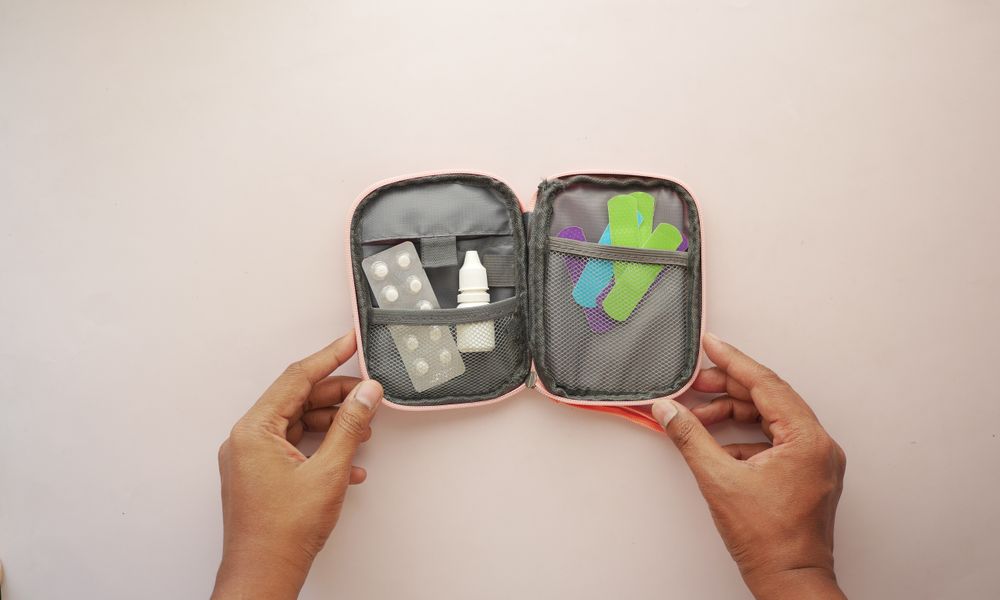
A well-prepared travel medical kit is your first line of defense against minor ailments, injuries, and sudden health risks. Always pack your medical kit in your carry-on luggage to prevent it from being lost or delayed in transit. Below is the ultimate checklist for assembling a professional-grade kit:
- Prescription Medications: A full supply of your daily medications in their original pharmacy bottles with your name clearly printed on the label, accompanied by a signed doctor's letter explaining the clinical necessity of each drug.
- Antimalarial Medications: A complete course of your prescribed chemoprophylaxis (such as Malarone), with clear instructions on starting and ending dates.
- Stomach Remedies: Oral Rehydration Salts (ORS) to treat severe dehydration from diarrhea; Loperamide (Imodium) for temporary relief of diarrhea (do not use if you have a high fever or bloody stool); and Bismuth subsalicylate (Pepto-Bismol) for mild indigestion.
- Broad-Spectrum Antibiotics: A self-treatment course (such as Azithromycin) prescribed by your travel clinic specifically for moderate-to-severe travelers' diarrhea.
- Insect Repellent: A high-quality repellent containing 20% to 30% DEET, Picaridin, or Oil of Lemon Eucalyptus to protect against vector-borne pathogens like dengue, malaria, and chikungunya.
- Basic First Aid Supplies: Sterile bandages in assorted sizes, gauze pads, medical tape, antiseptic wipes, a tube of triple-antibiotic ointment, and hydrocortisone cream for itchy bites.
- Over-the-Counter Analgesics: Ibuprofen and Acetaminophen (Paracetamol) for pain and fever reduction.
- Tools and Instruments: A digital thermometer, fine-tipped tweezers for tick removal, a pair of small scissors, and hand sanitizer containing at least 60% alcohol.
- Water Purification Tablets: A backup strip of chlorine dioxide tablets for emergency water disinfection.
Navigating Yellow Fever Vaccination Requirements International Travel 2026 with TripGuard360
As international travel conditions grow increasingly unpredictable, keeping track of changing vaccination mandates, transit laws, and disease outbreaks can be an overwhelming task. A border health restriction enacted while you are mid-flight can throw your travel plans into chaos. This is where TripGuard360 provides an invaluable layer of protection, transforming how modern travelers manage their global health safety.
TripGuard360 operates a highly sophisticated, real-time tracking engine that continuously monitors global health advisories and vaccine updates. The platform ingests data directly from international public health authorities, including the World Health Organization, the CDC, and various national foreign ministries. The moment a sovereign government alters its yellow fever vaccination requirements international travel 2026 protocols—or implements emergency screening measures like the recent Ebola restrictions—TripGuard360's system automatically updates its central database.
For registered users, this automated process translates into immediate, actionable safety nets. If you have an upcoming trip logged in your profile, TripGuard360 cross-references your routing with active entry health requirements. If a destination changes its transit rules, or if an endemic outbreak triggers a sudden Yellow Card requirement for your itinerary, TripGuard360 instantly dispatches an alert directly to your phone via Telegram and email. These real-time alerts detail the precise vaccine requirements, dosing guidelines, and necessary lead times, ensuring you have ample time to visit a licensed travel clinic and obtain your validated documentation before you arrive at the airport.
In the modern era of travel, health security and digital agility are closely linked. By combining proactive clinical preparation with the real-time vigilance of TripGuard360, international travelers can confidently navigate the complex global biosecurity landscape of 2026. Prioritize your health, keep your immunizations up to date, and let technology handle the task of keeping you informed, secure, and ready to cross any border without delay.